trash bags
bespoke bags crafted from secondhand and waste materials
I make functional, whimsical, wearable objects from trash to slowly replace my existential climate dread with excitement at finding use and beauty in discarded materials. I take pieces of my own trash, other people’s trash, and secondhand material. I examine them to understand their material properties and test fiber art techniques I can apply. Then I craft a love letter to the original material, a new form that refuses to be overlooked.




Why Bags? Why Trash?
Bags offer both function and adornment. There is a shortlist of materials we commonly use to craft them–materials like leather, cotton, or rattan. They’re pliant, lightweight, and strong enough to carry our possessions. They can be shaped or decorated into a work of art or a sign of taste and cultural cachet. These legacy materials have demonstrated their value to us. I use trash to affirm that waste can still provide value. I can find use and beauty in these discarded materials if I take the time and care to shape them.
Name:
Unnamed
Ingredients:
discarded/unused, produce bag mesh
discarded/spent, aquarium filter balls
Source:
UC Davis Bodega Marine Laboratory, ARG Department
click the image to learn more (it’s a vid)
trash bag no. 1
Construction:
simple basketweave base finished with alternating overhand knots
mesh filled with color-matched bioballs to showcase its expansion properties
Material Notes:
This plastic was too slippery to hold a single row of knots. No matter how tight the knot was made, it would loosen immediately once tension was released. Instead of introducing mitigating measures like adhesive or stitching, I opted for forming multiple, tight, alternating rows of knots to build up the bag’s walls. With no slack between rows, knots are always under tension and unable to slip undone.
bonus effect: the rigid walled structure maintains its shape
The materials allow an amazing amount of stretch. The filled portions of the bag walls can be made more dramatic in future iterations.
trash bag no. 2
Name:
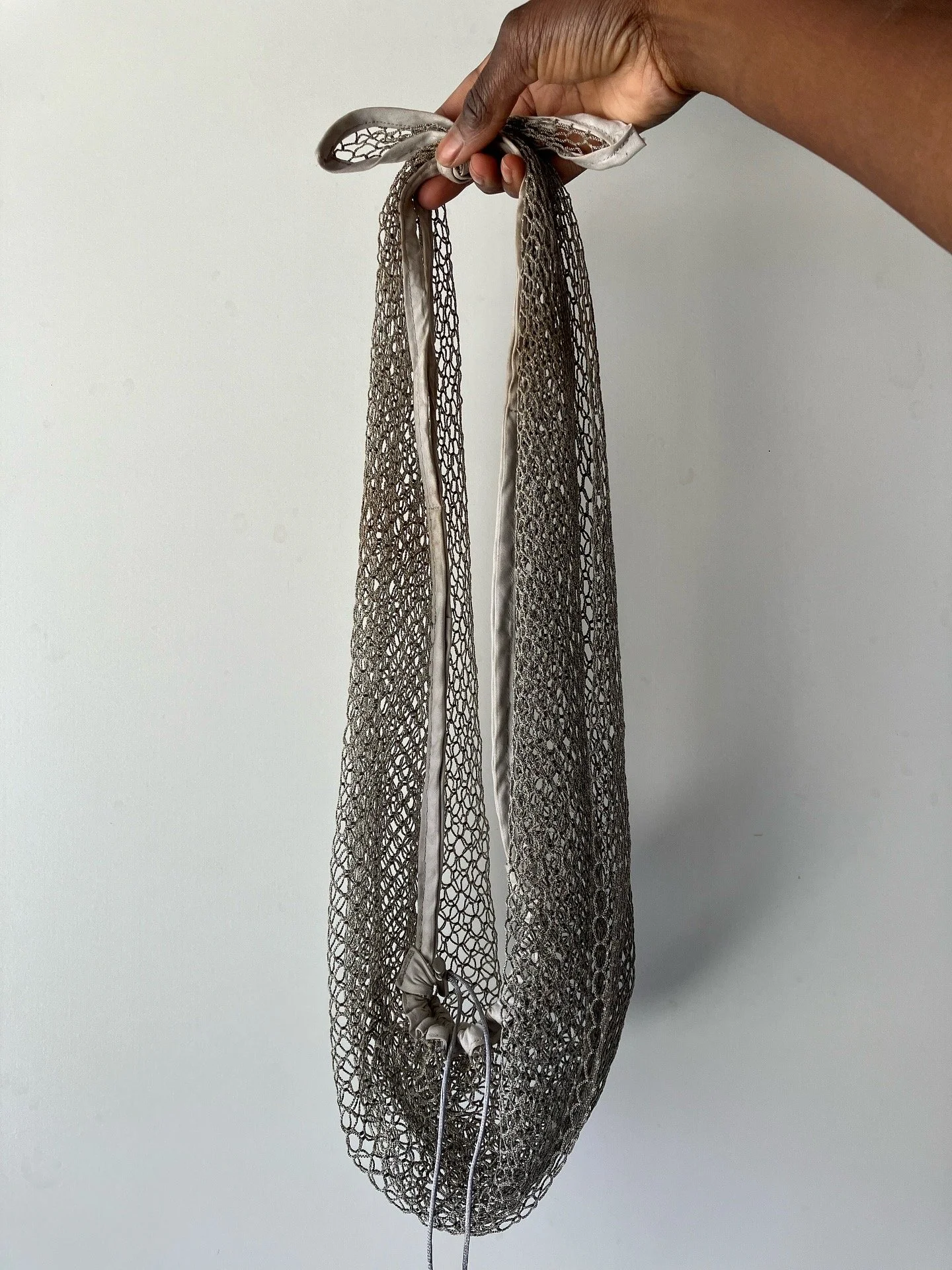
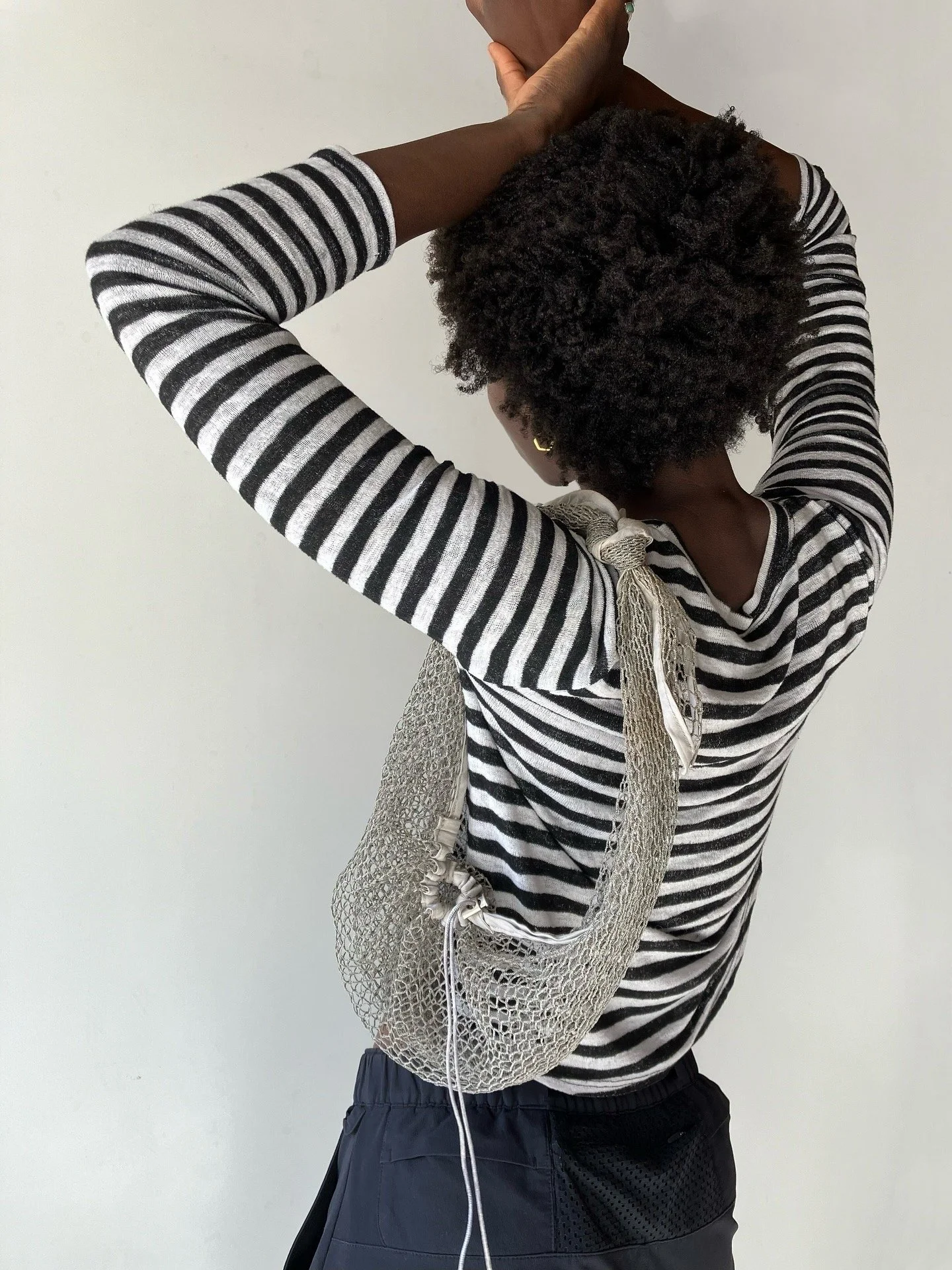
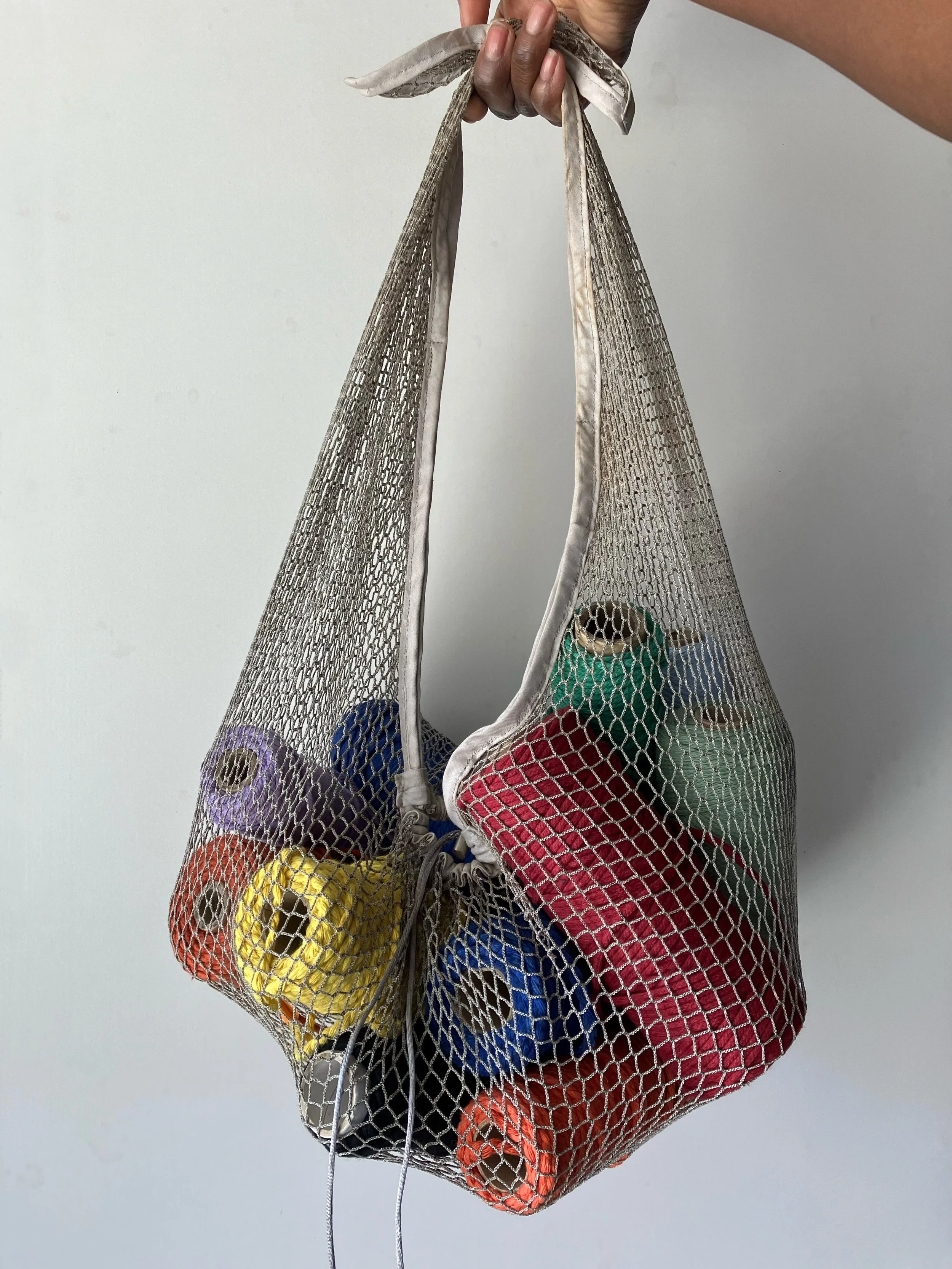
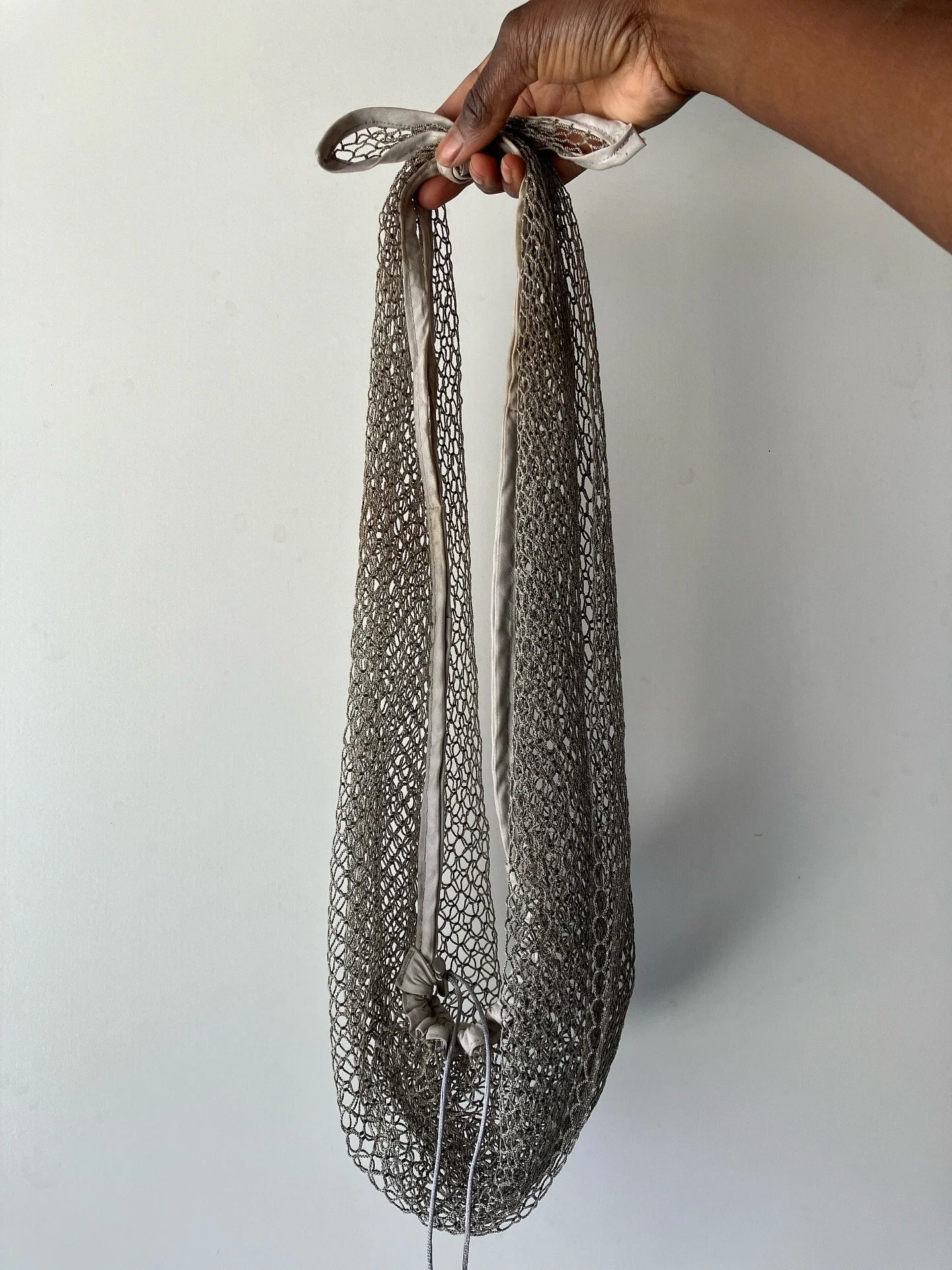
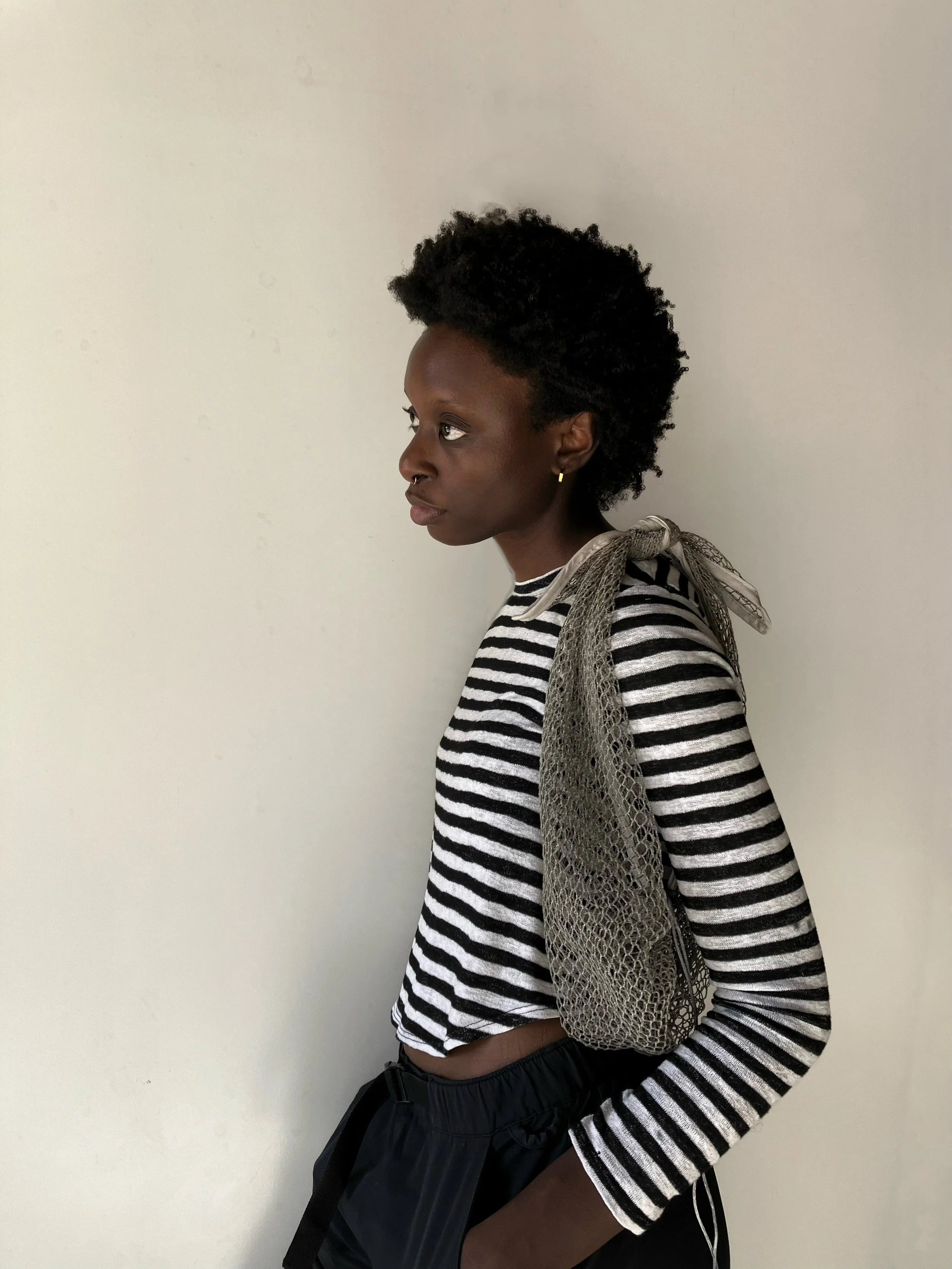
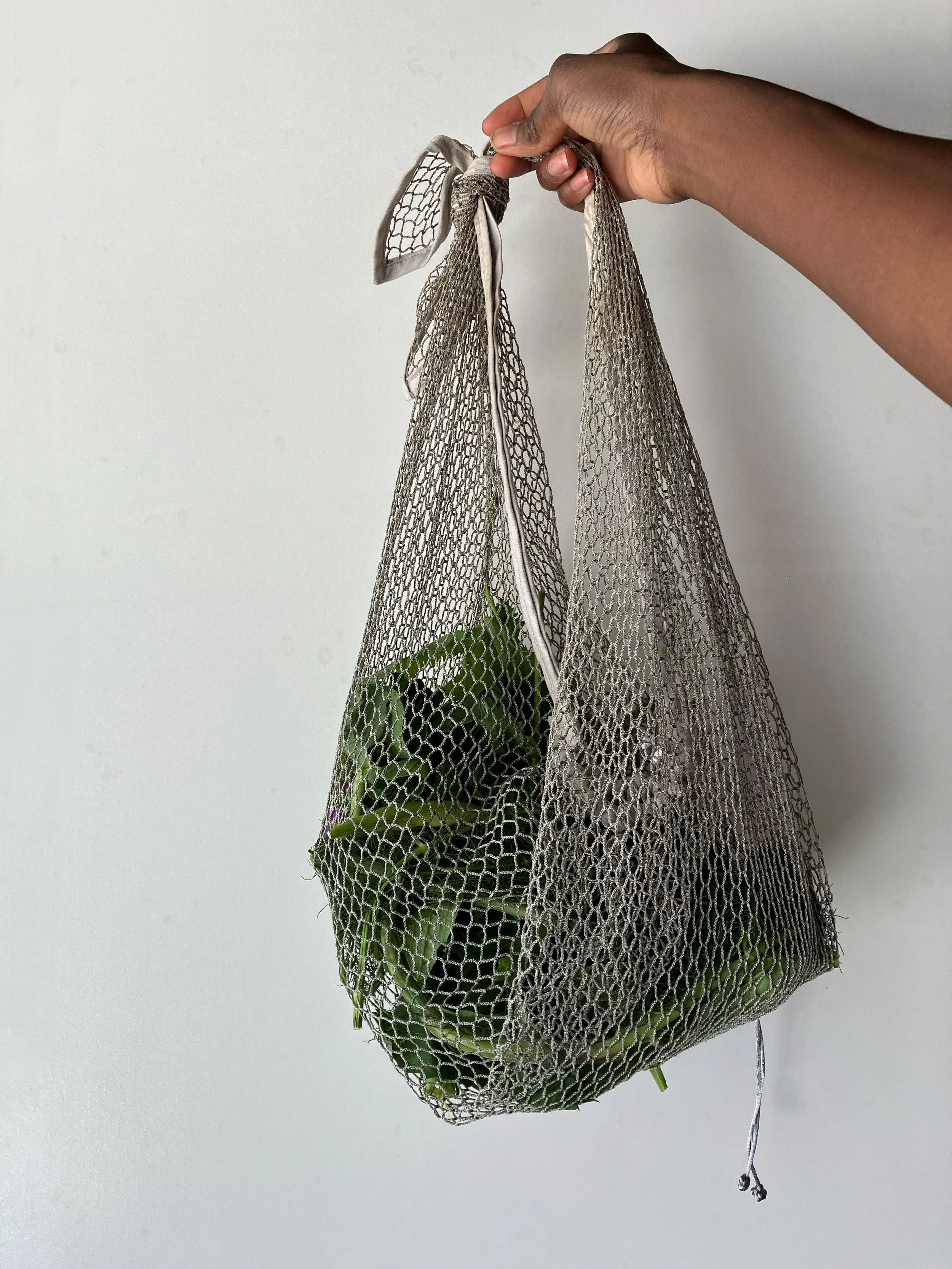
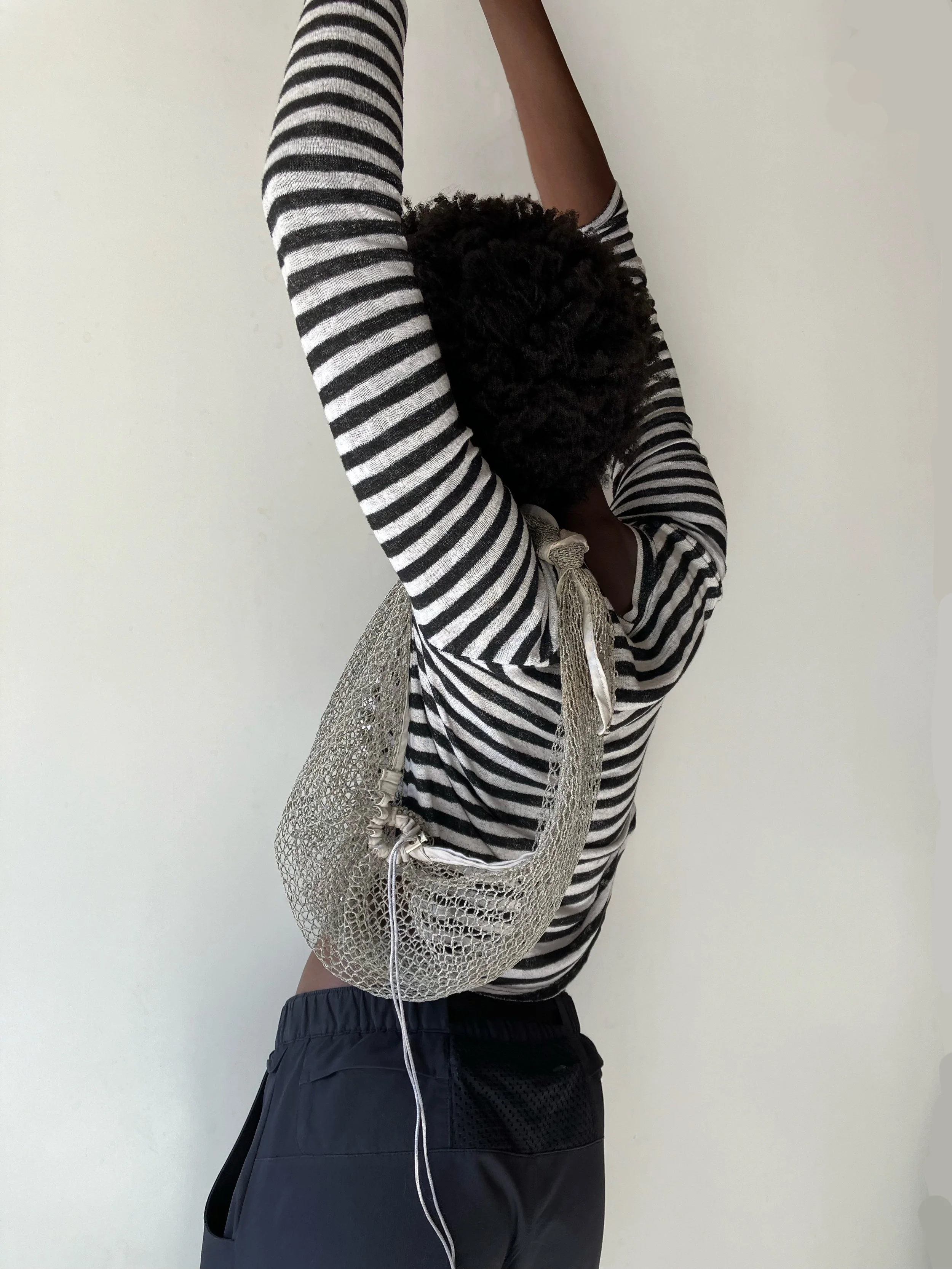
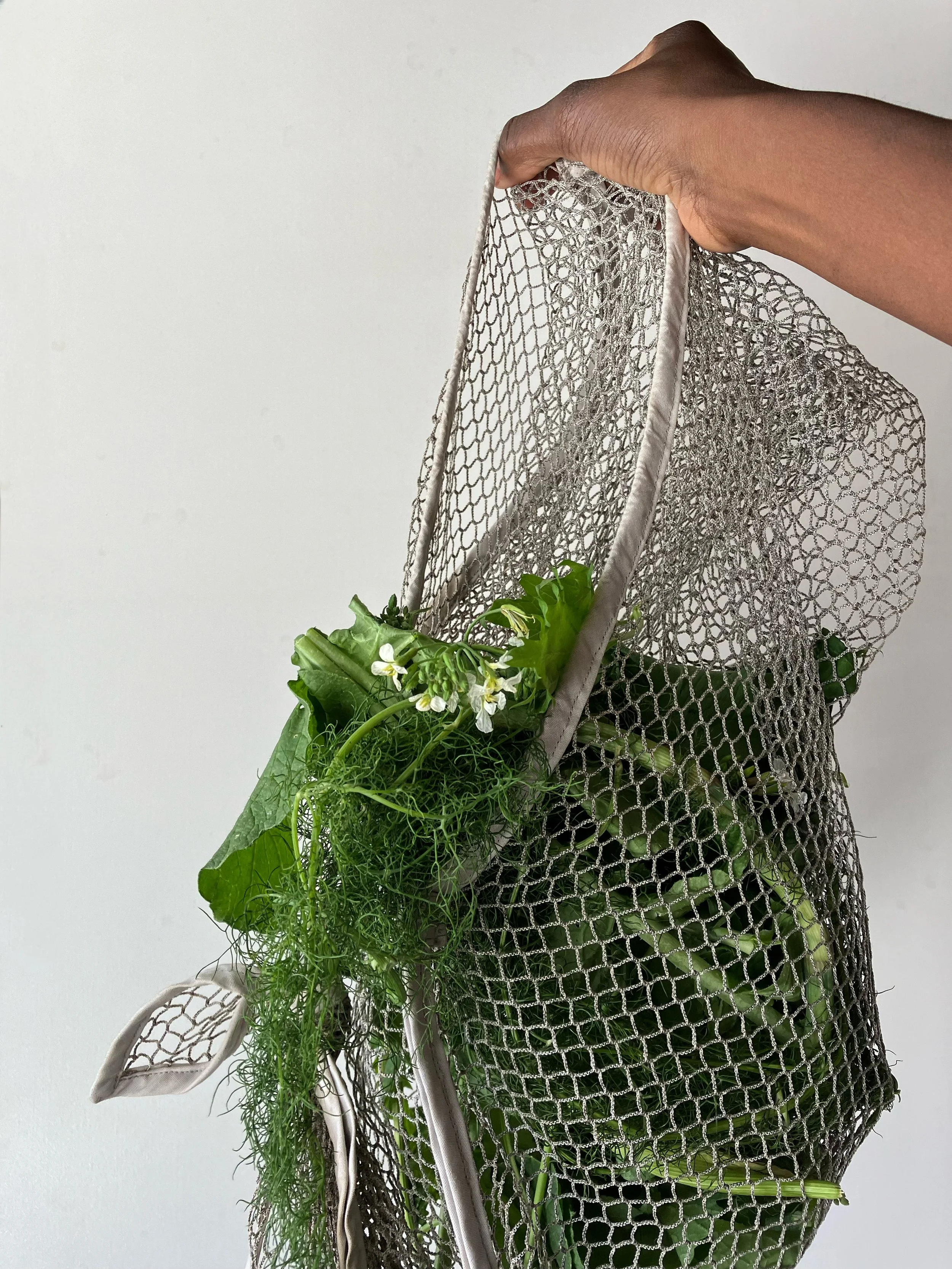
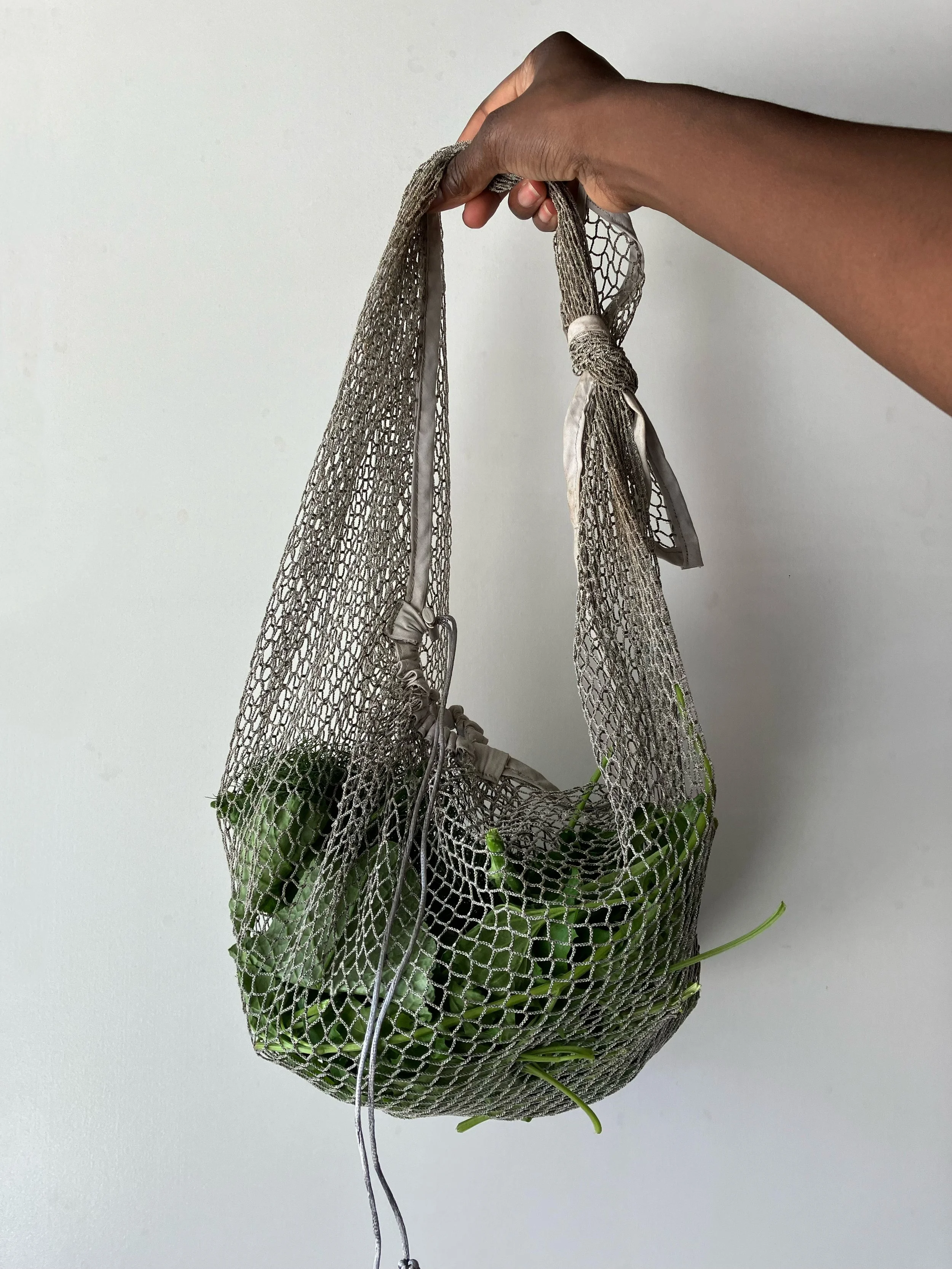
The Clam Bag (working title)
Ingredients:
discarded/light damage, nylon fishing net
discarded/undamaged, nylon satin cord
secondhand/unused, polyester bias tape
new, metal drawstring toggle
new, color matched thread
Sources:
UC Davis Bodega Marine Laboratory, ARG Department
secondhand materials shop, ArtFORM, San Diego
Construction:
patterned and cut into an ellipse
hemmed around the full perimeter with bias tape
hems joined and sewn into a canoe shape with the ellipse points and center left open
tied to form a handle/strap
Material Notes:
This net can’t be machine sewn directly. The mesh gets caught below in the bobbin case and will jam the machine. Traditional net joining/mending techniques can be used but are time consuming, especially for any project beyond this size.
Machine sewing is possible if you sandwich the mesh between thick fabric, or between double layers of thin fabric. Encasing the edges of this net in bias tape allowed me to complete all my sewing by machine, and added a finished look.
trash bag no. 3
Name:
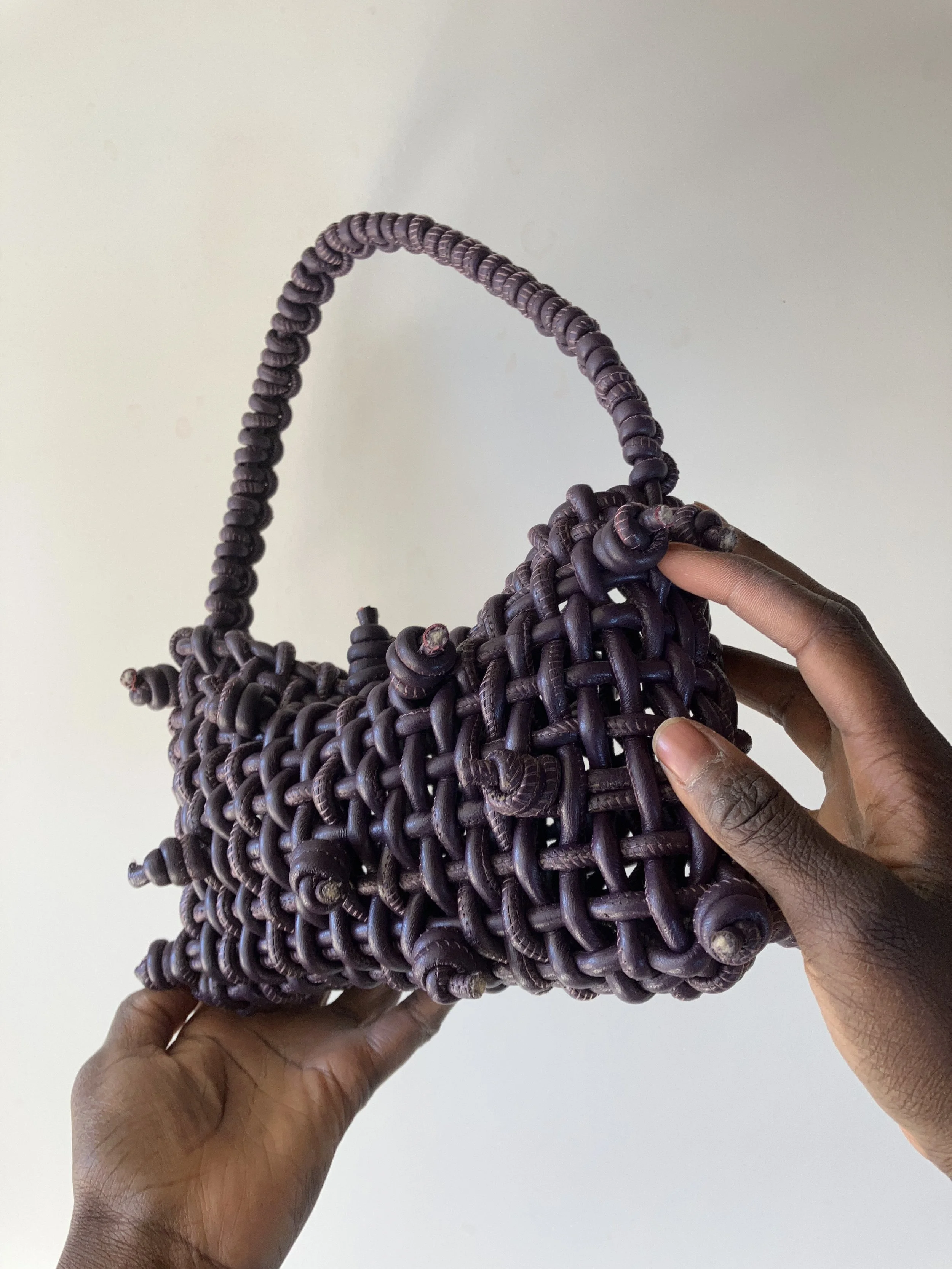
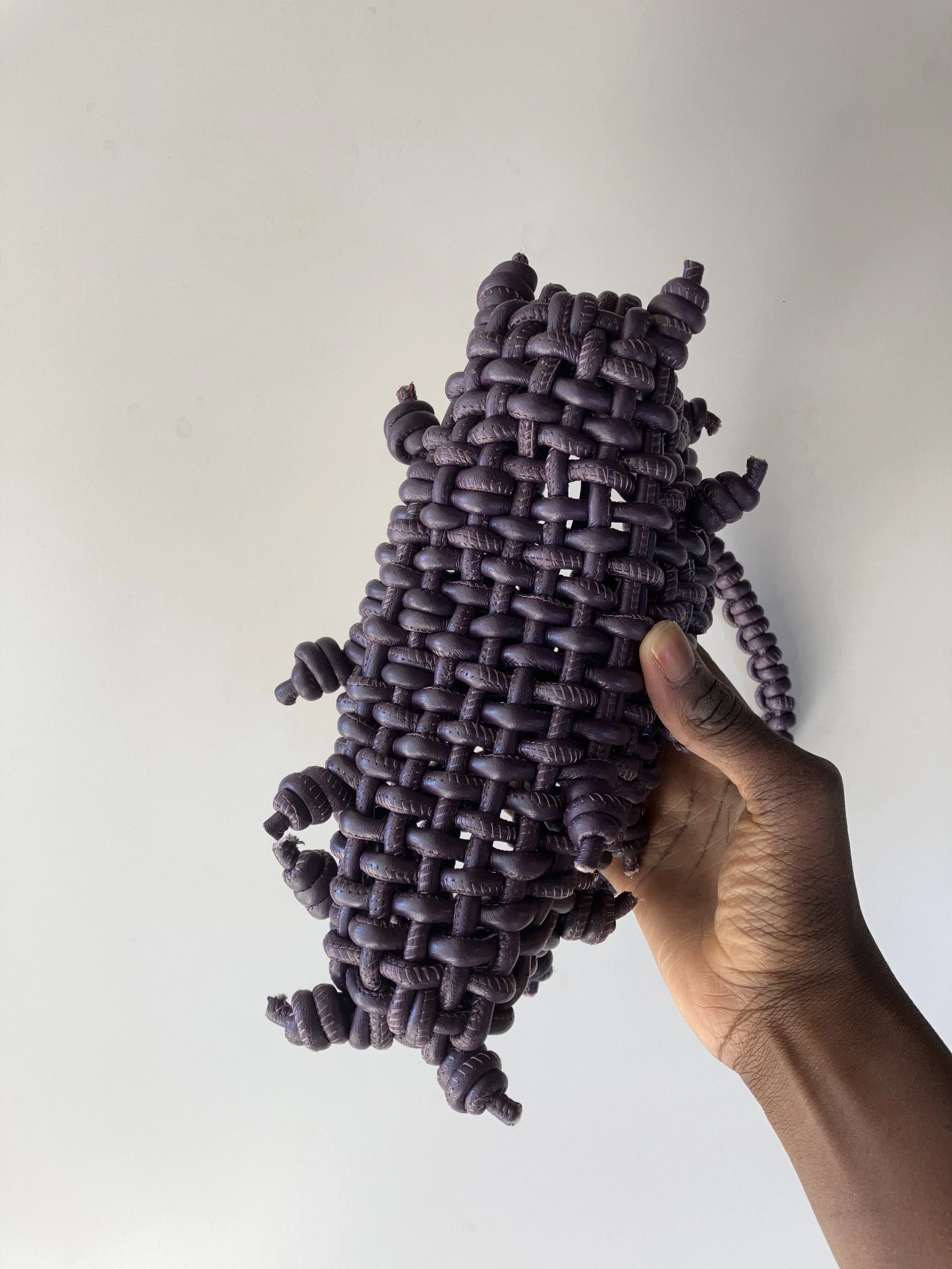
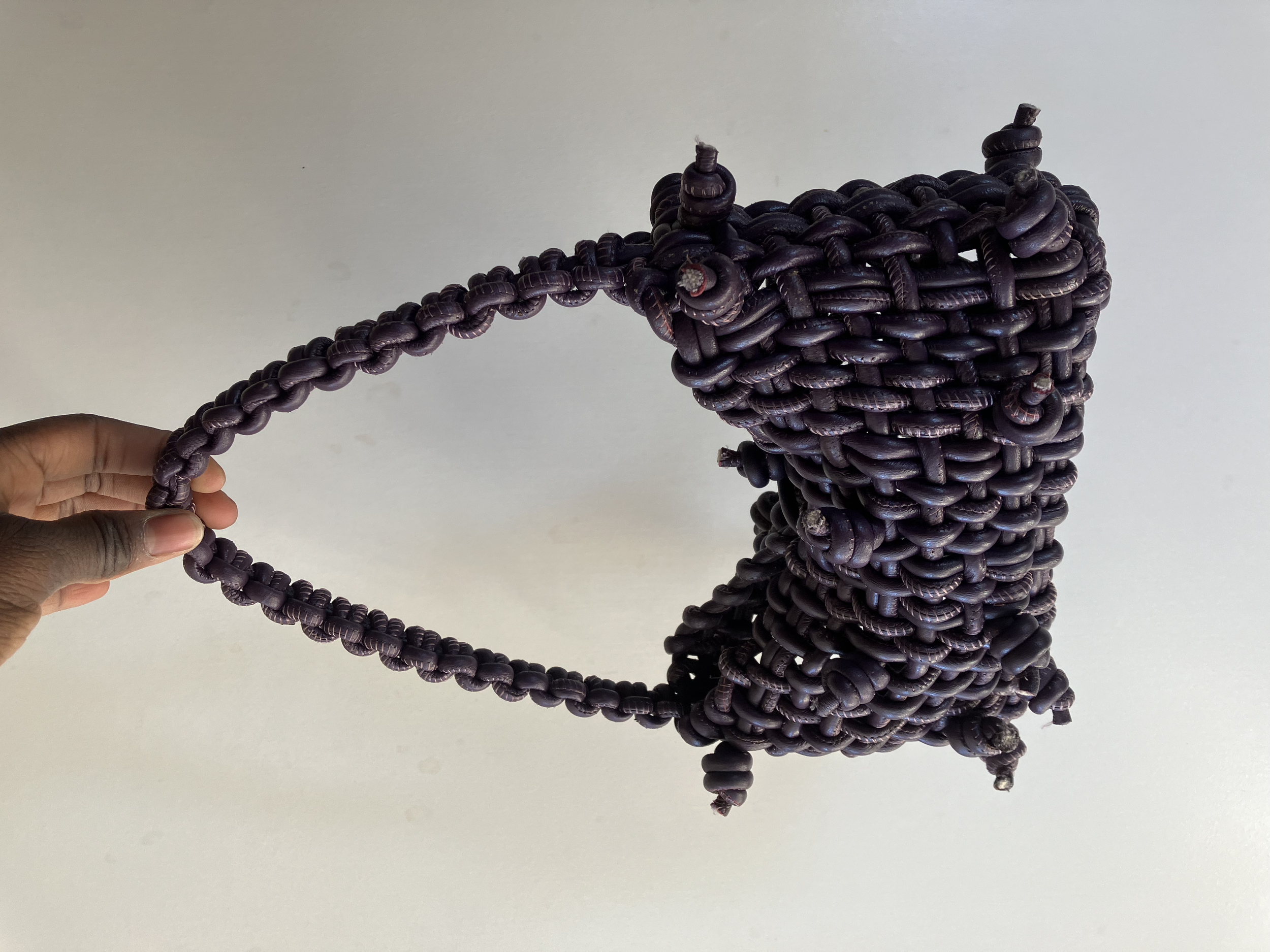
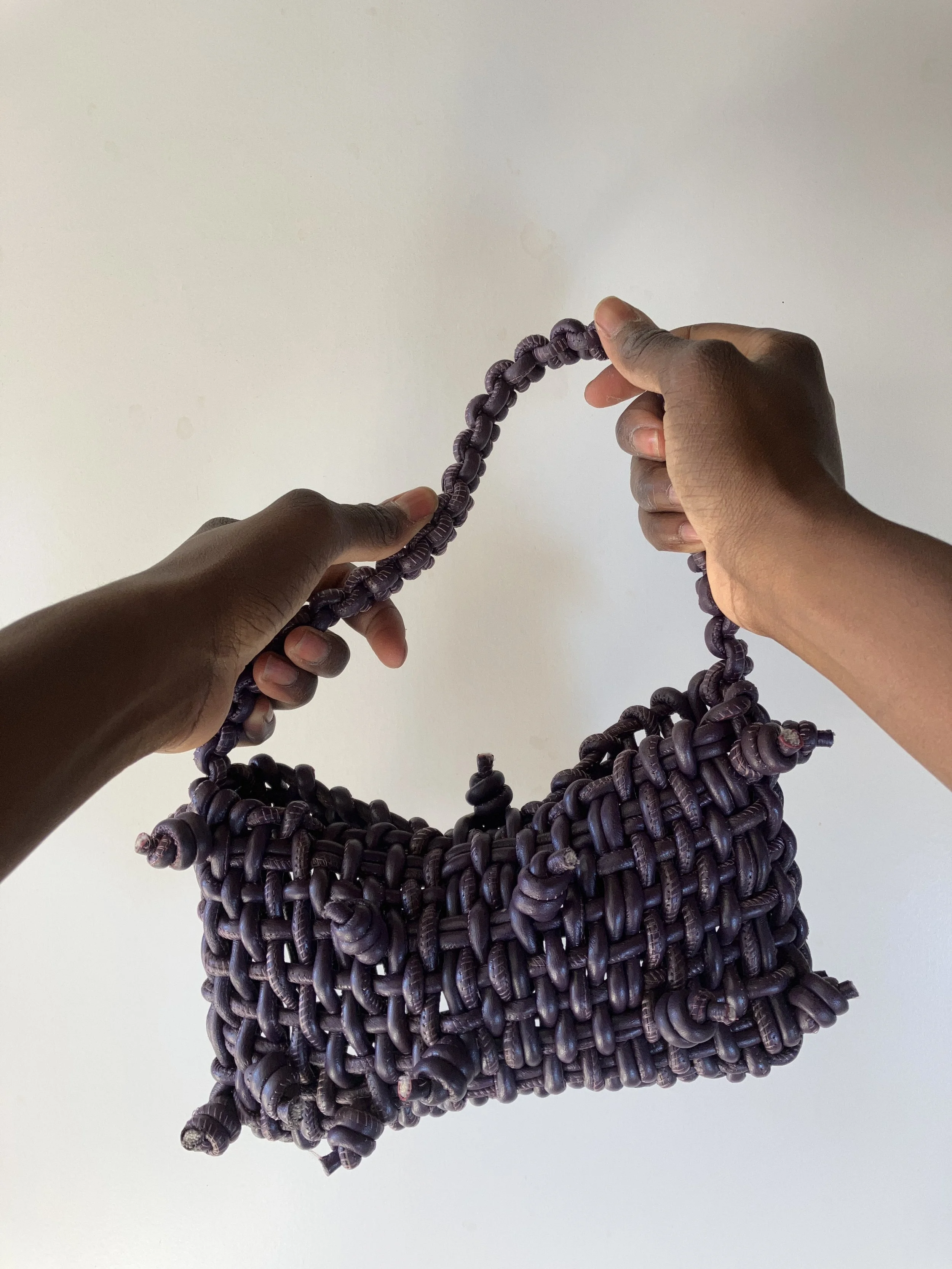
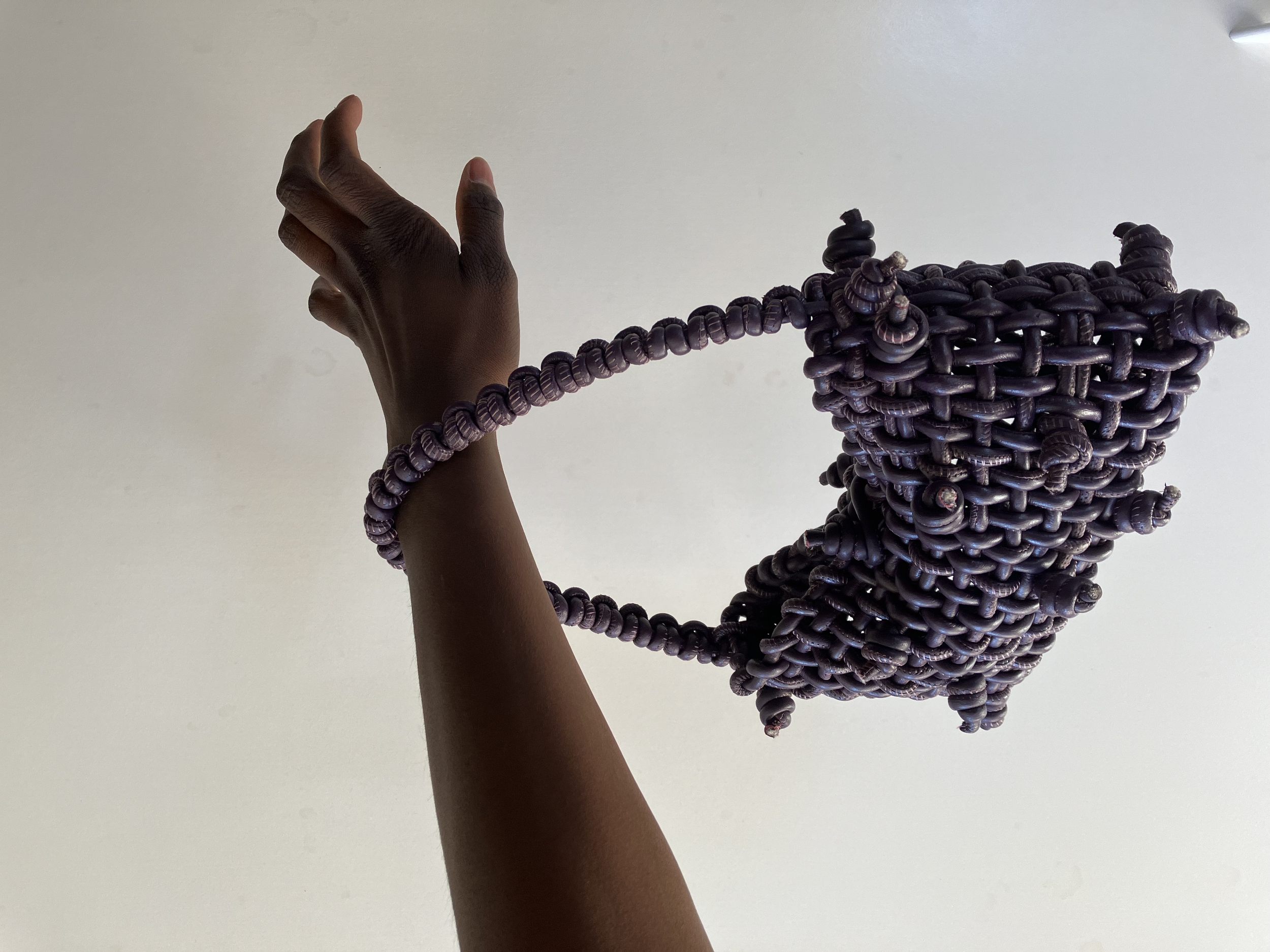
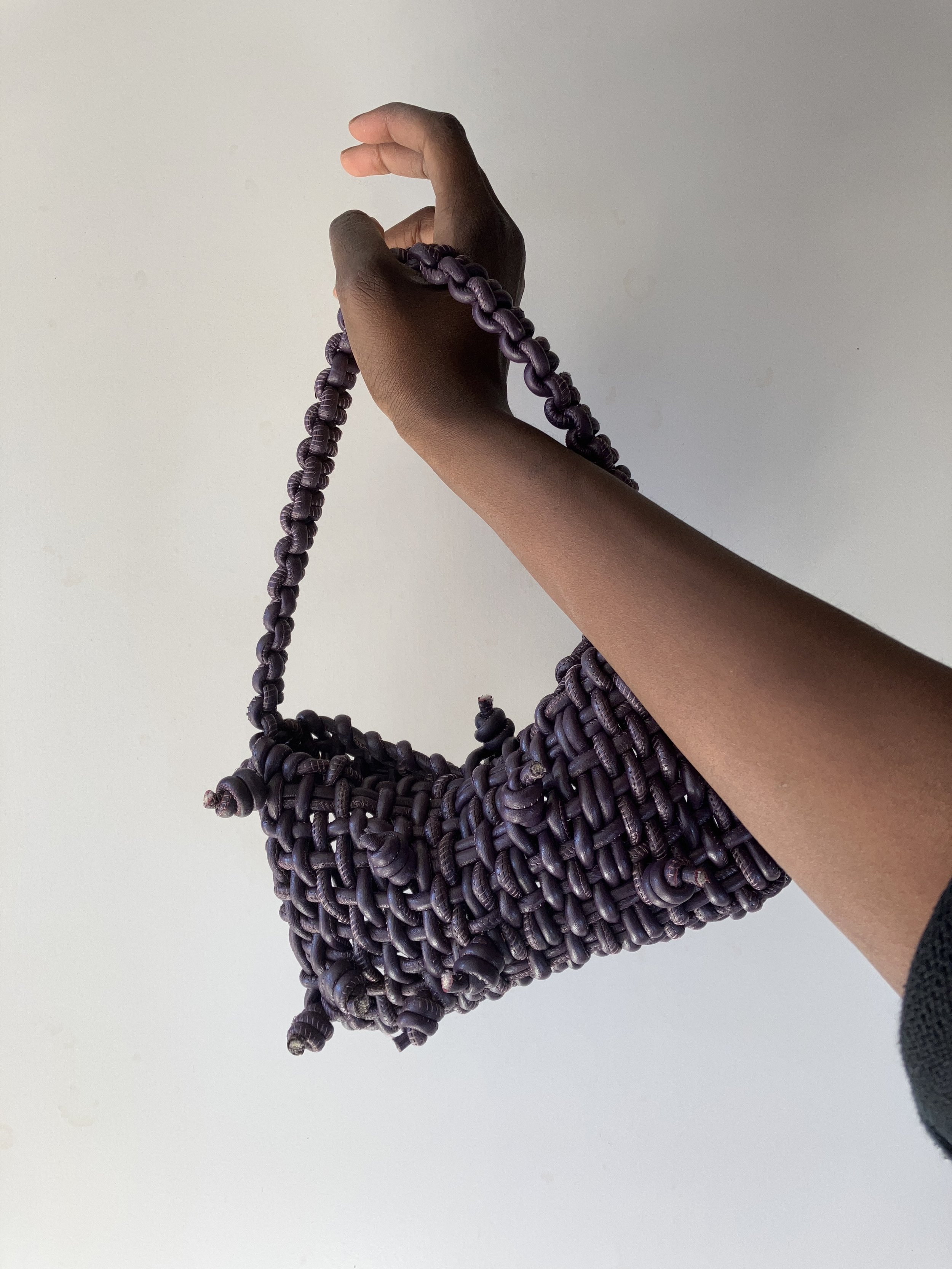
the Bantu bag
Ingredients:
secondhand/light damage, stitched leather cord
Source:
secondhand materials shop, ArtFORM, San Diego
Construction:
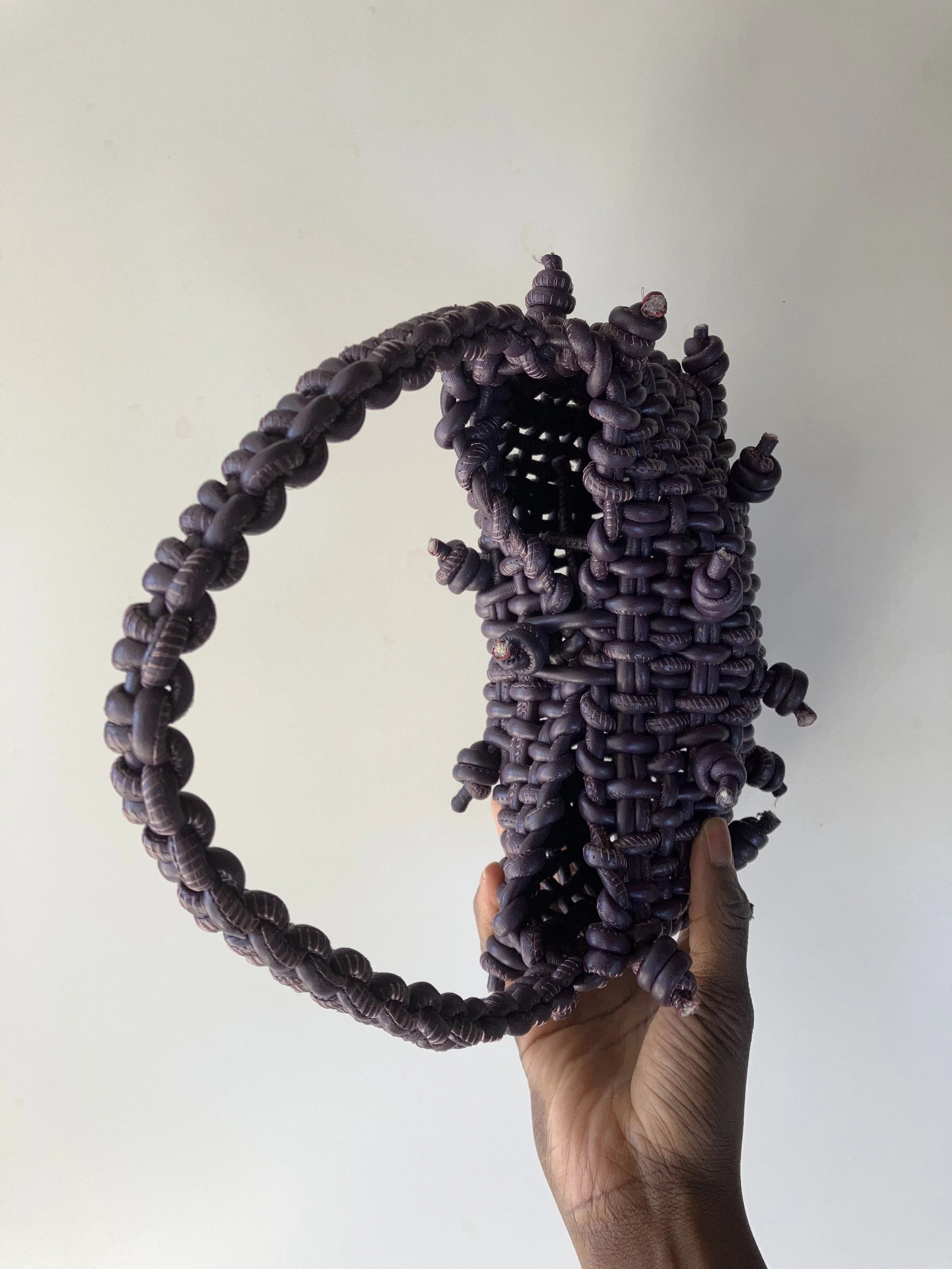
woven body with barrel knot finish where shorter cords overlap.
vertical lark’s head strap
Material Notes:
the knotted spiky look emerged out of a limitation of materials. normally, i weave my purses from one continuous strand of cord up to 100 ft long. that’s not feasible when purchasing secondhand, and expensive purchased new. i’d have to piece shorter strands together to complete the body.
my usual inclination is to weave the loose ends in well enough that they’re barely noticeable. i can’t hide with leather. the cordage is too stiff to tuck away and too thick to join the way you might do with a cotton yarn or cord.
so we embrace the beautiful leather material properties. i added knots to the overlapping ends of cord, and added additional overlaps to fill emptier spots
trash bag no. 4
Name:
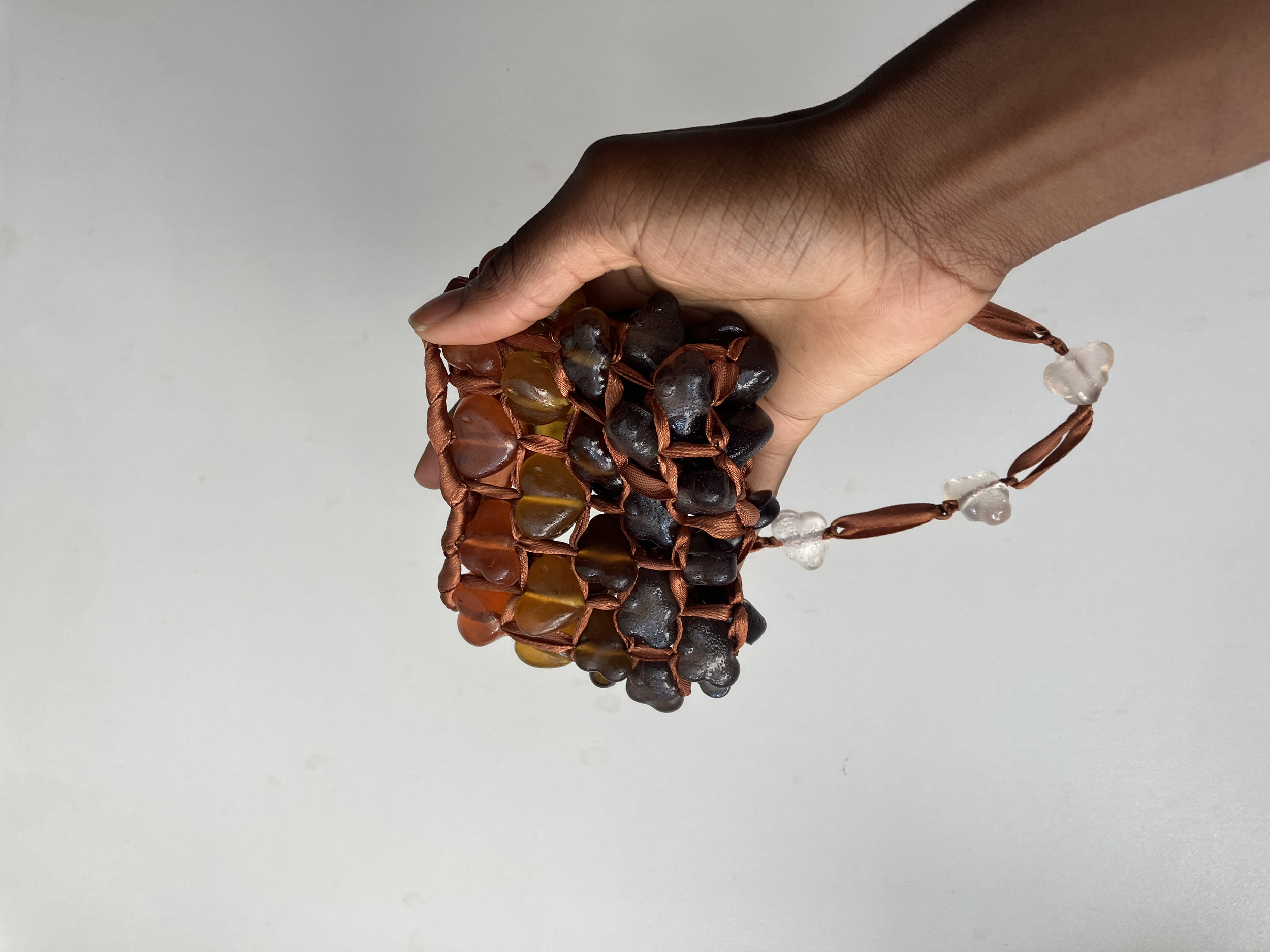
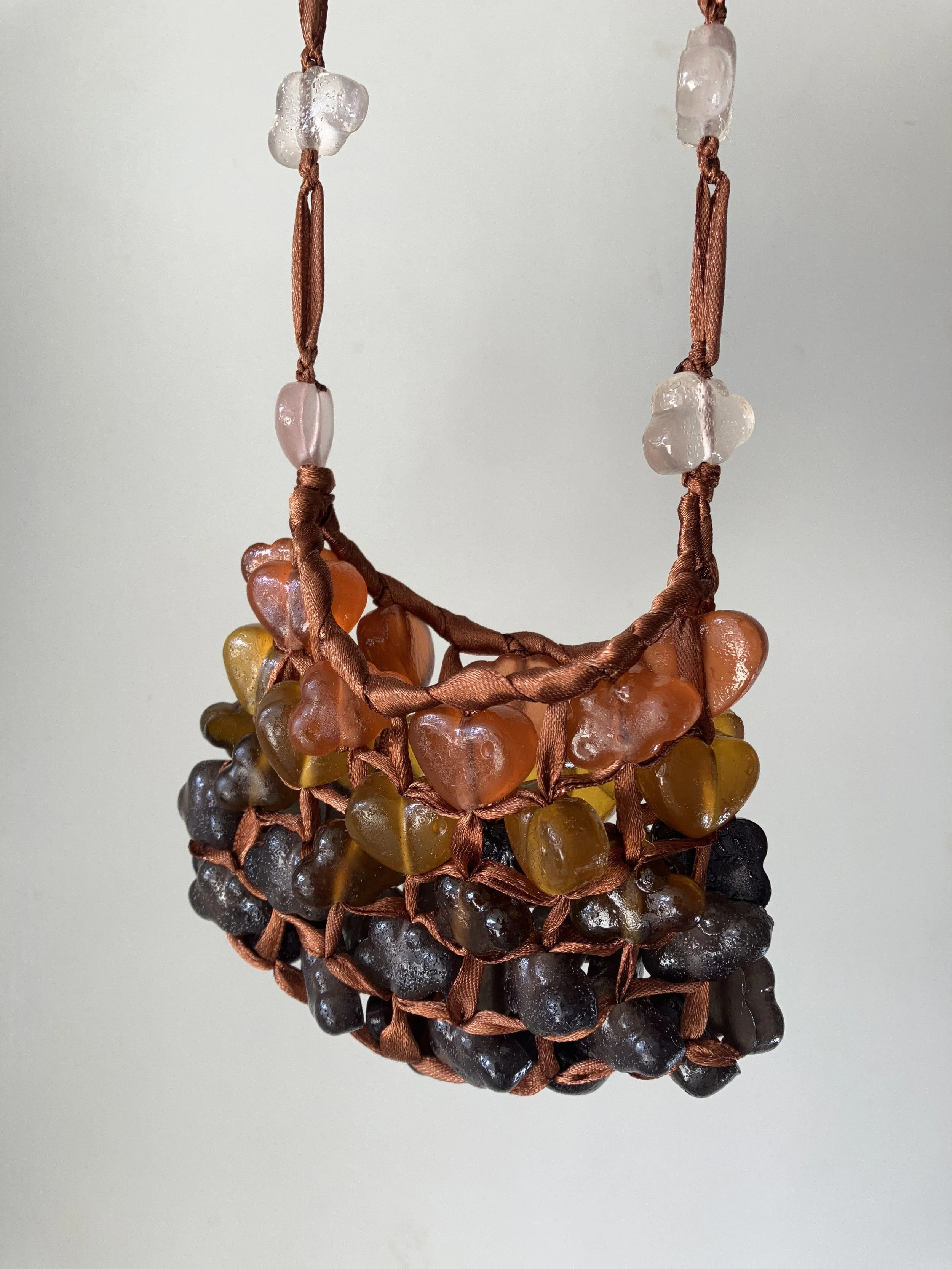
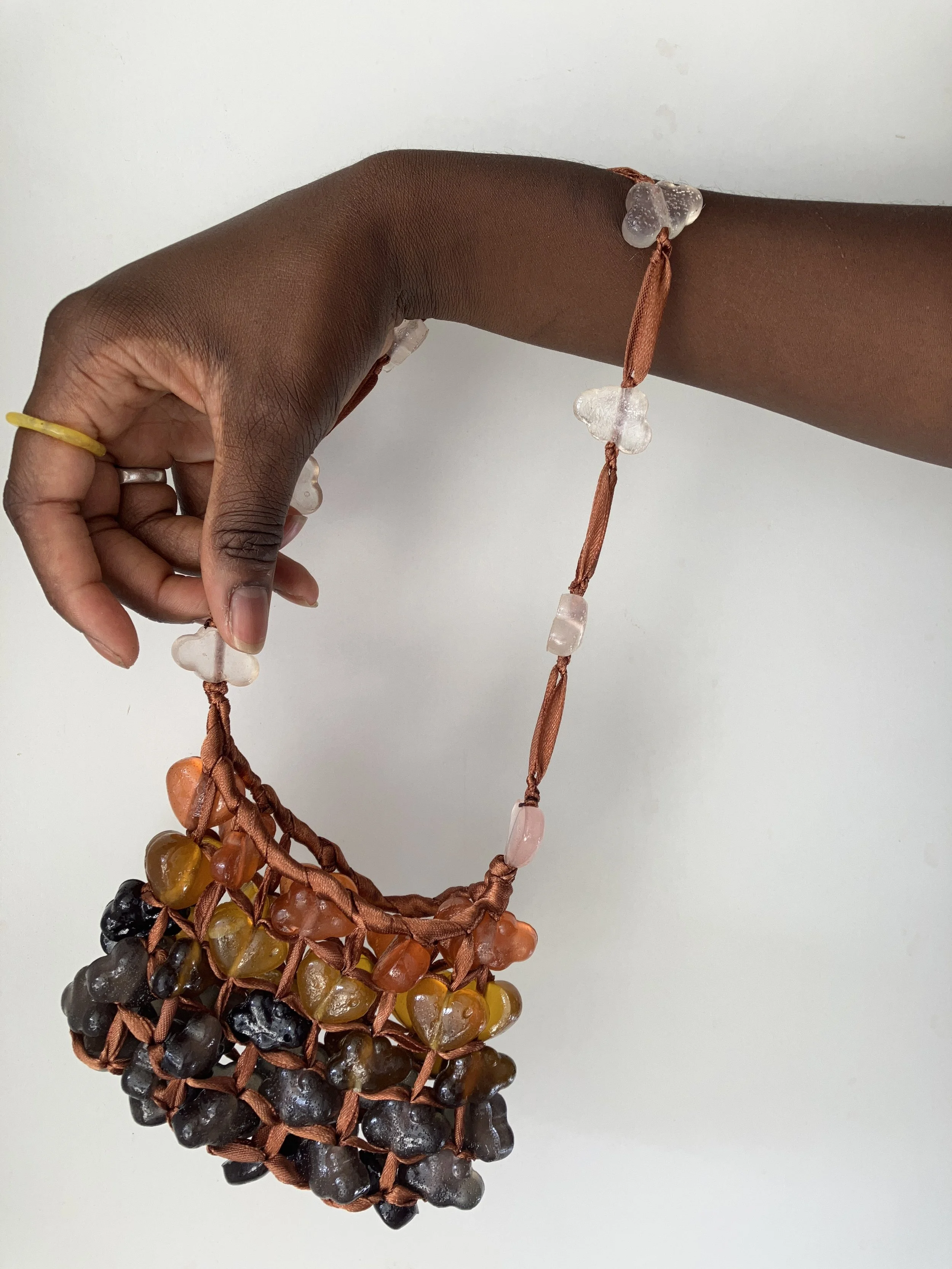
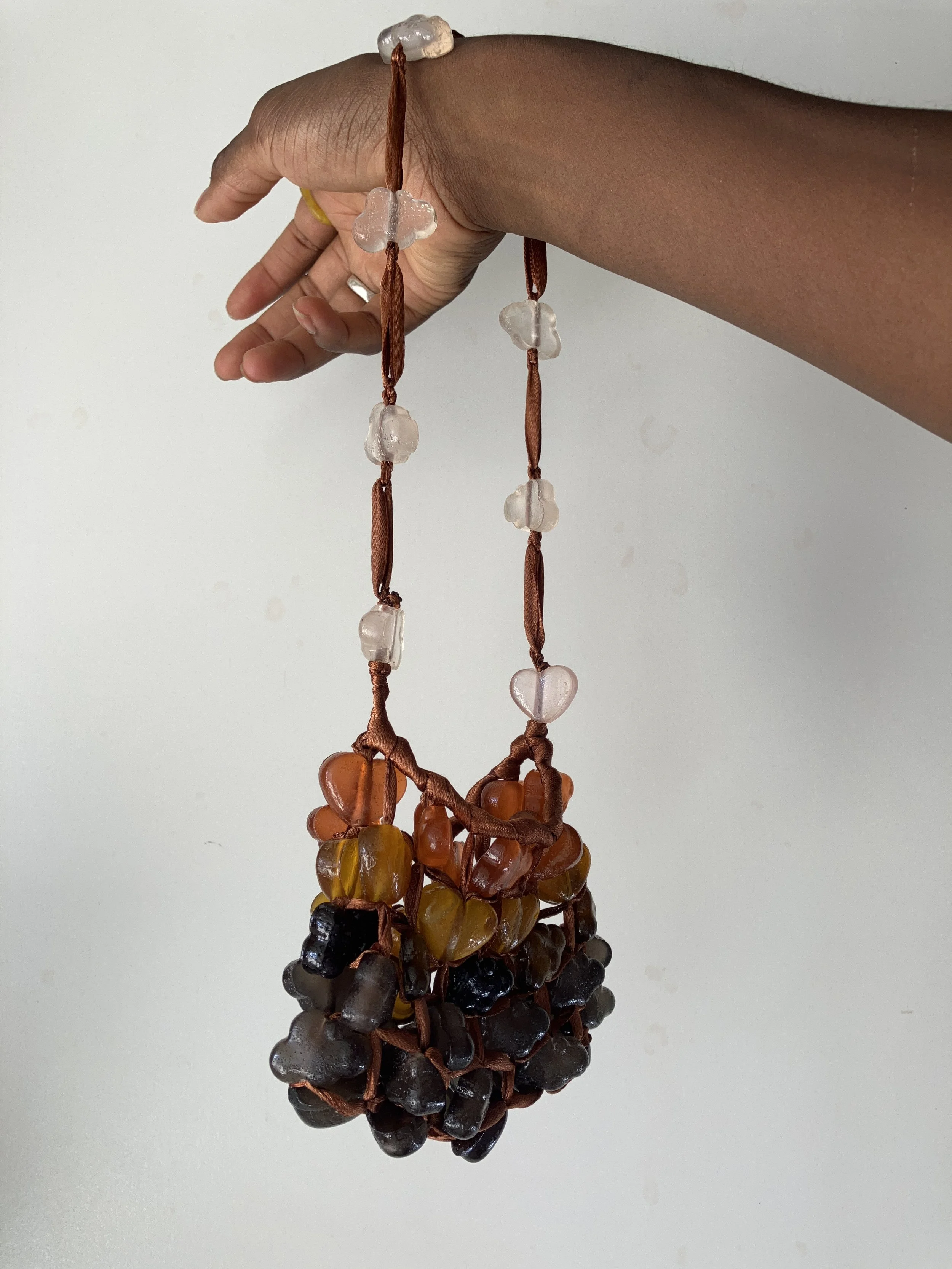
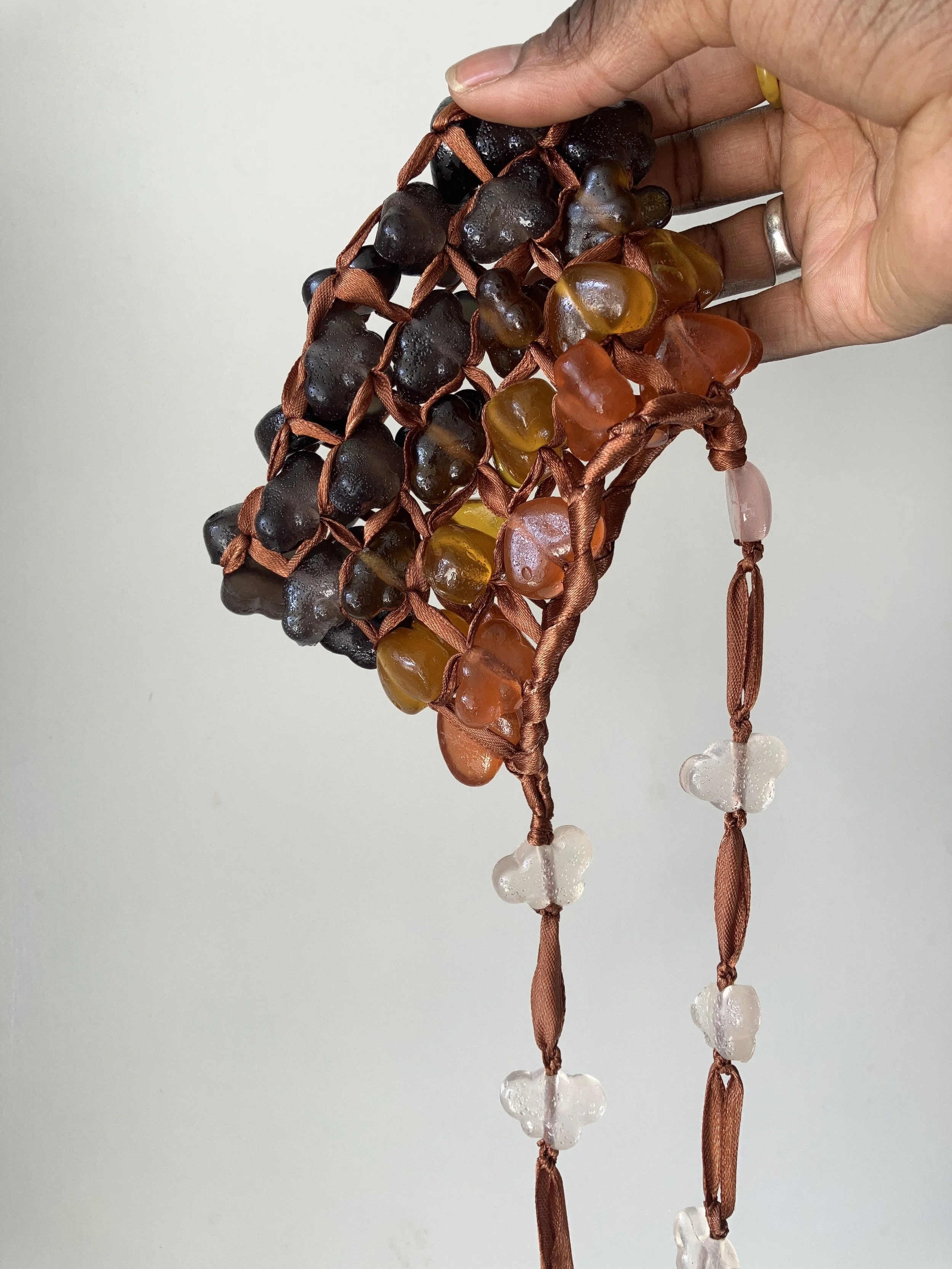
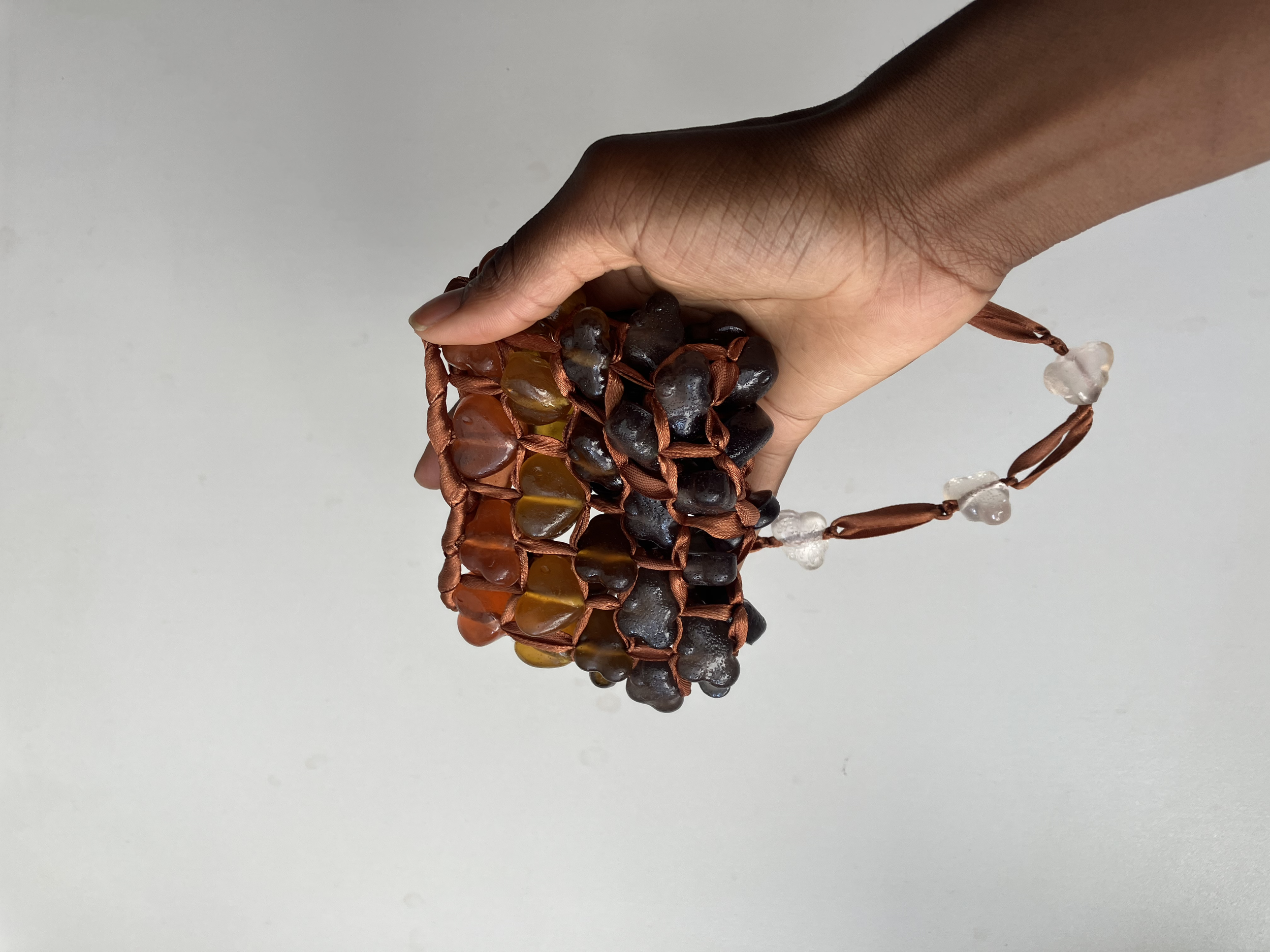
the Amber bag
Ingredients:
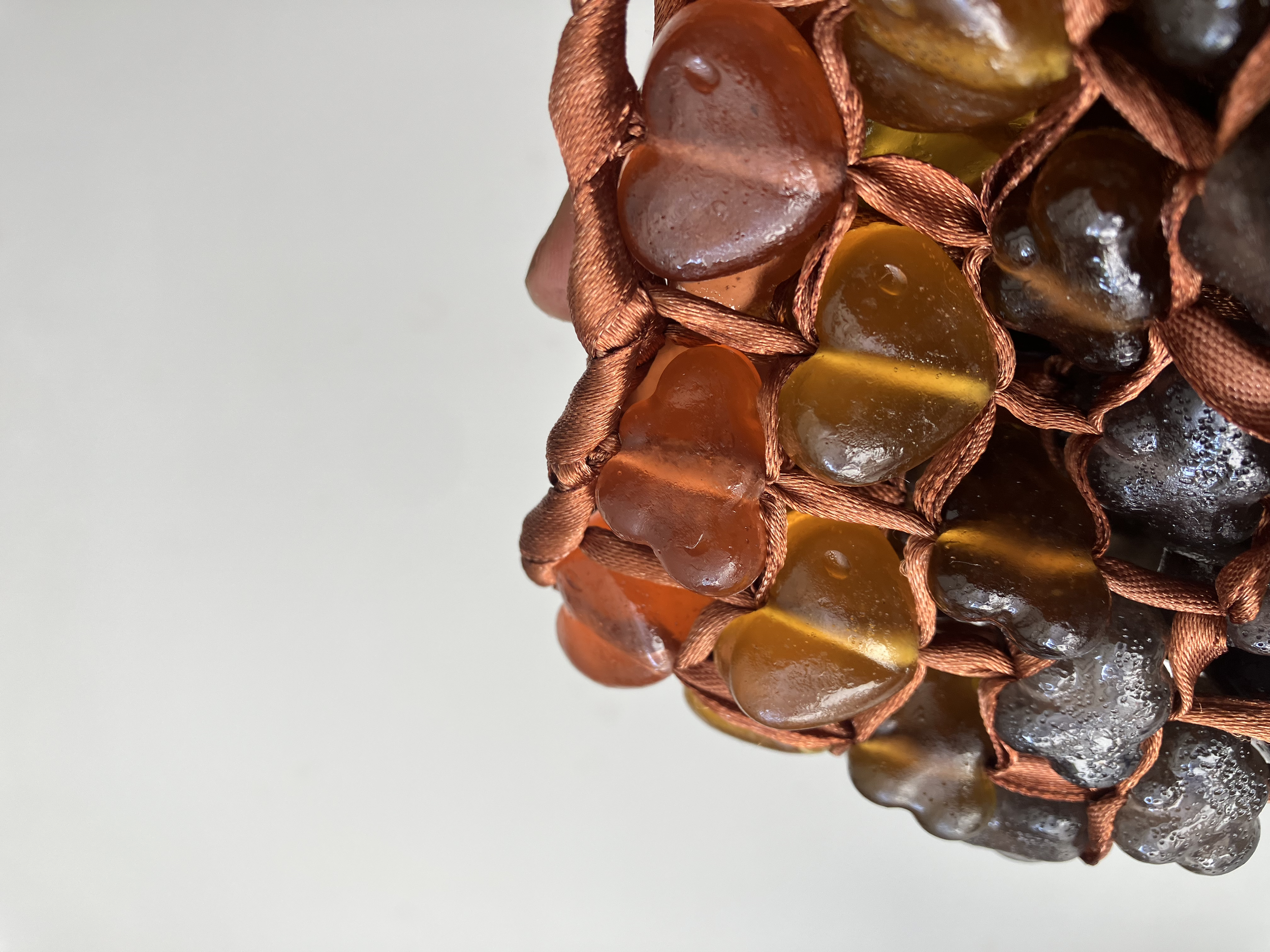
biomaterial, potato starch beads
secondhand/unused, nylon ribbon
Sources:
Mo.Na Gems
secondhand materials shop, Creative Reuse for Art, Berkeley
Construction:
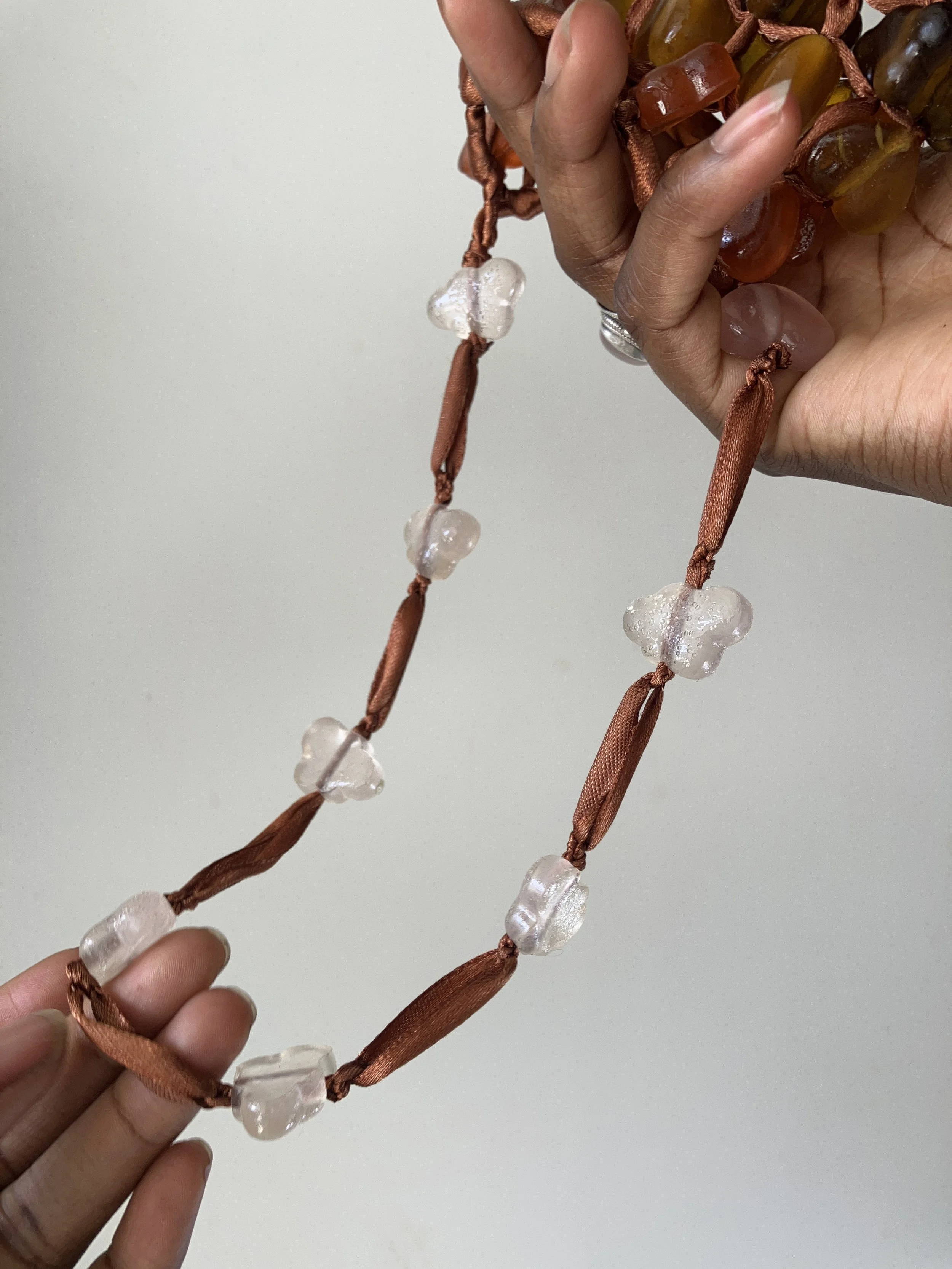
i beaded a grid pattern for the body of the bag that highlighted both gems and ribbon, then finished with a knotted strap and ribbon wrapped hem
Material Notes:
I love how these cola, amber, and pink colors came together!
I can probably halve the starting ribbon if I recreate this piece or something similar.
trash bag no. 5
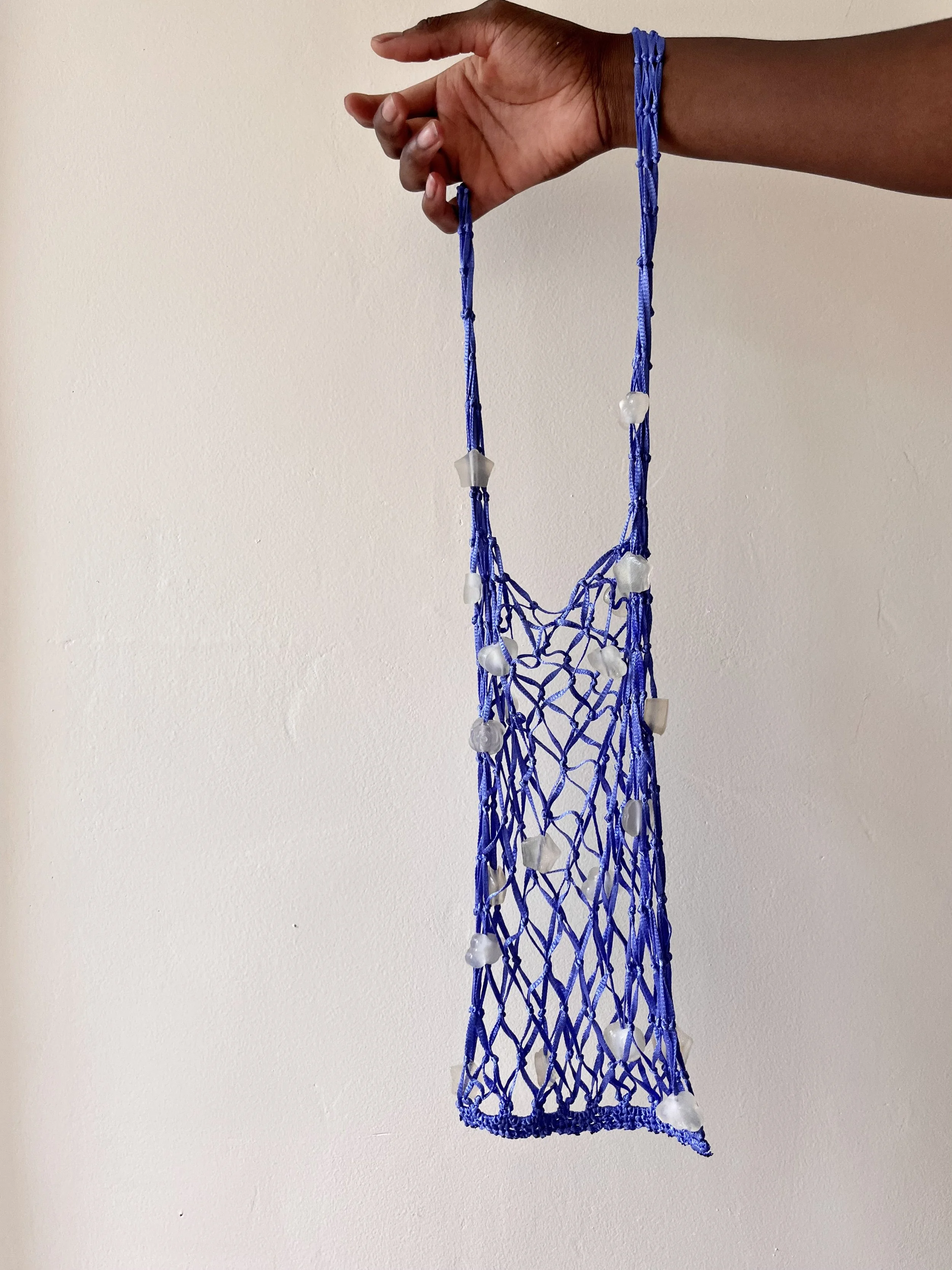
Name:
?
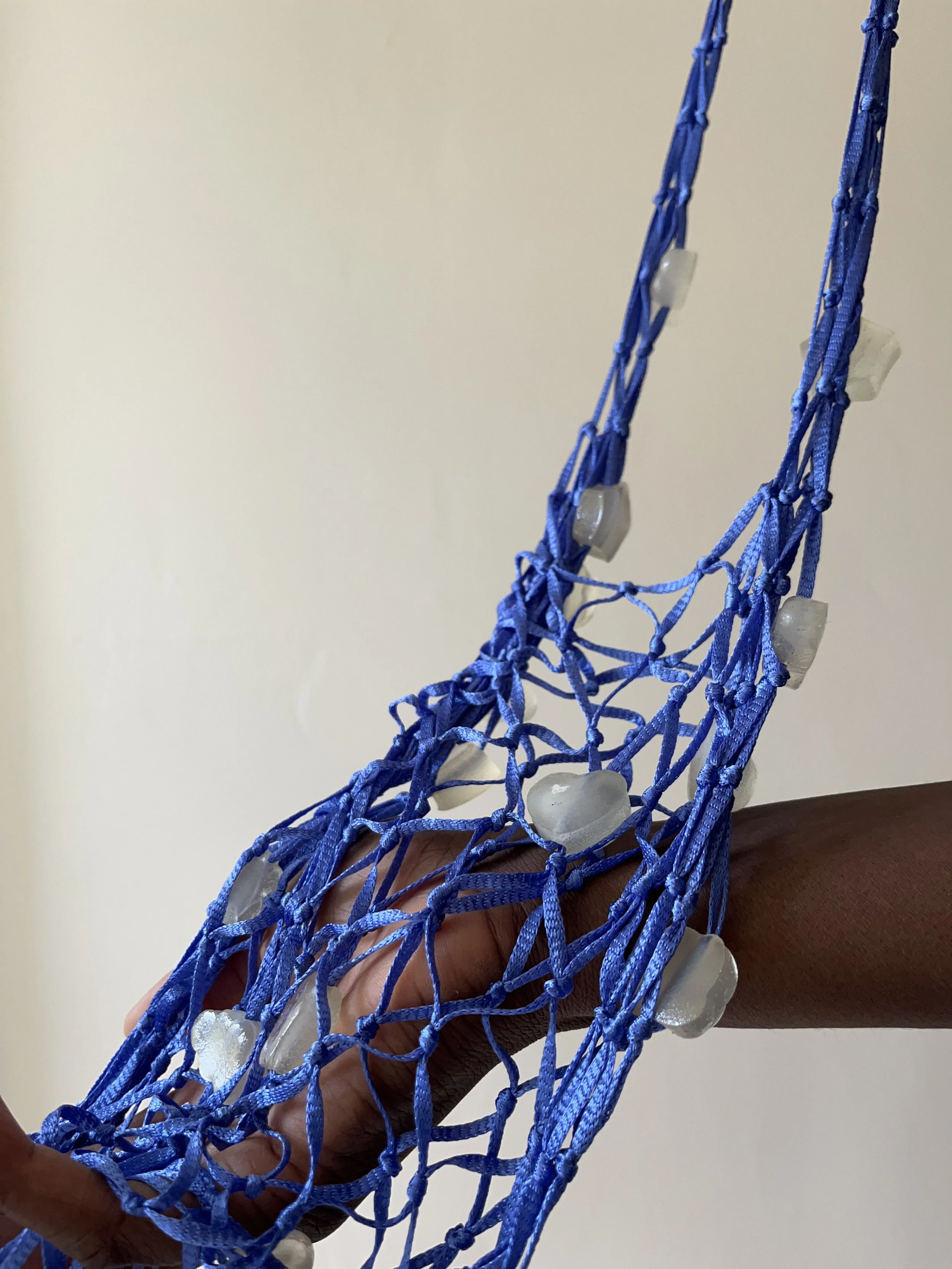
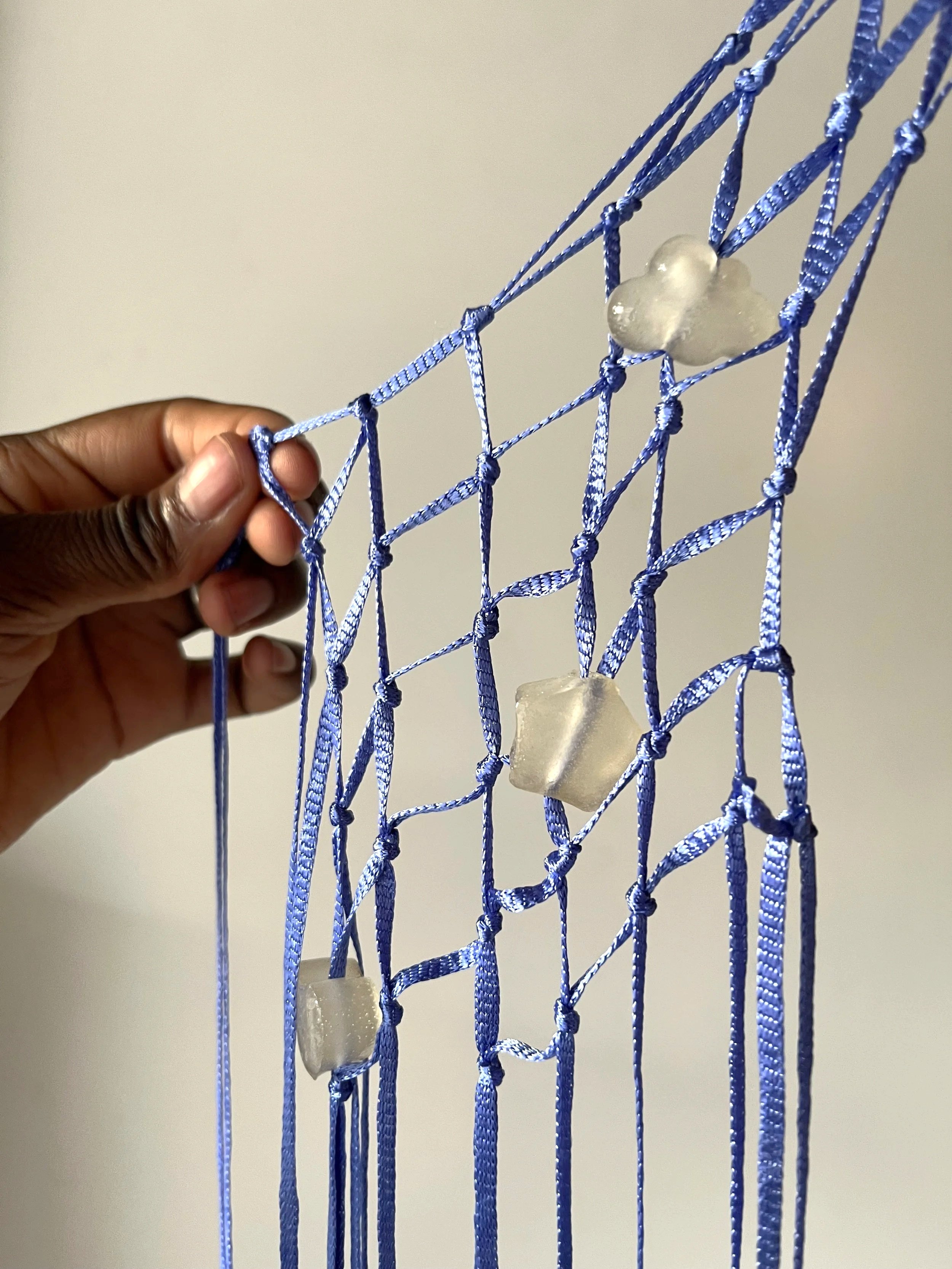
Ingredients:
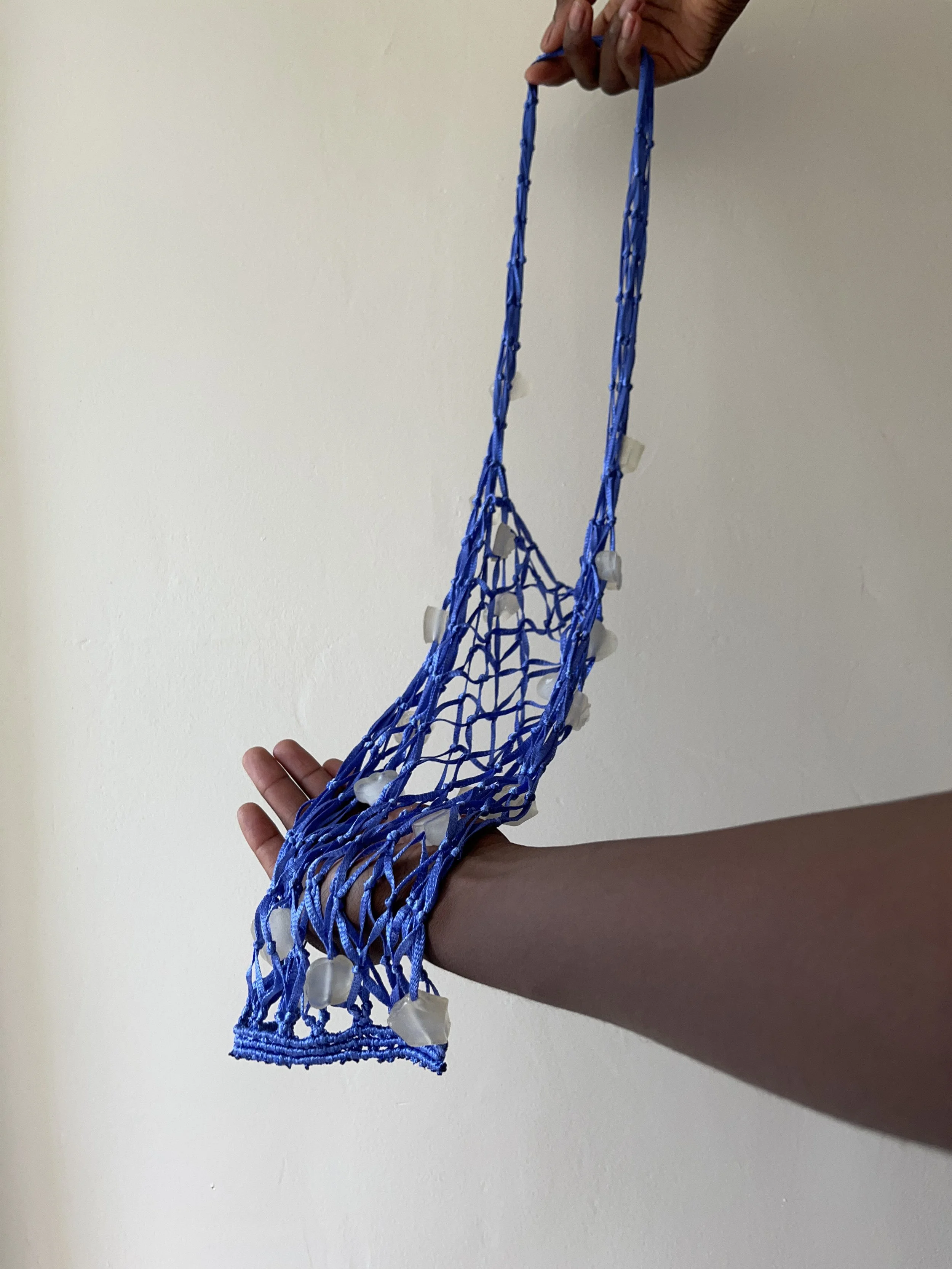
biomaterial, potato starch beads
secondhand/unused, ribbon yarn (likely polyester)
Sources:
Mo.Na Gems
secondhand materials shop, ArtFORM, San Diego
Construction:
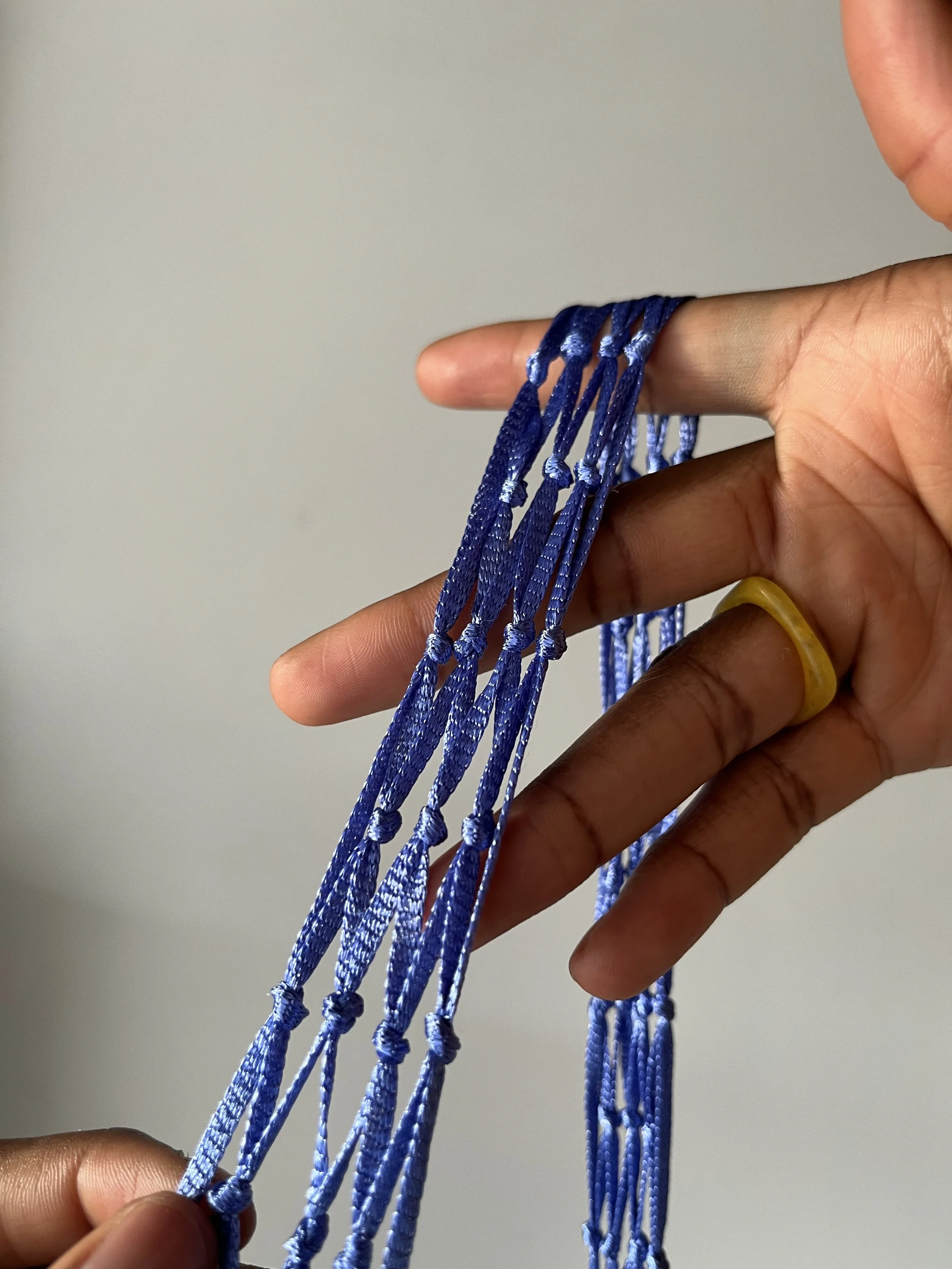
i crafted an top-down open mesh pattern from entirely overhand knots, interspersed with beads. the bag is finished with multiple, gradually increased rows of clove hitch knots.
Material Notes:
this material does not hold knots well, so i had to be strategic in which one i used
these beads were slightly too heavy for the material. doubling up on yarn, or using a thicker/stiffer material altogether would have improved the final look
trash bag no. 6
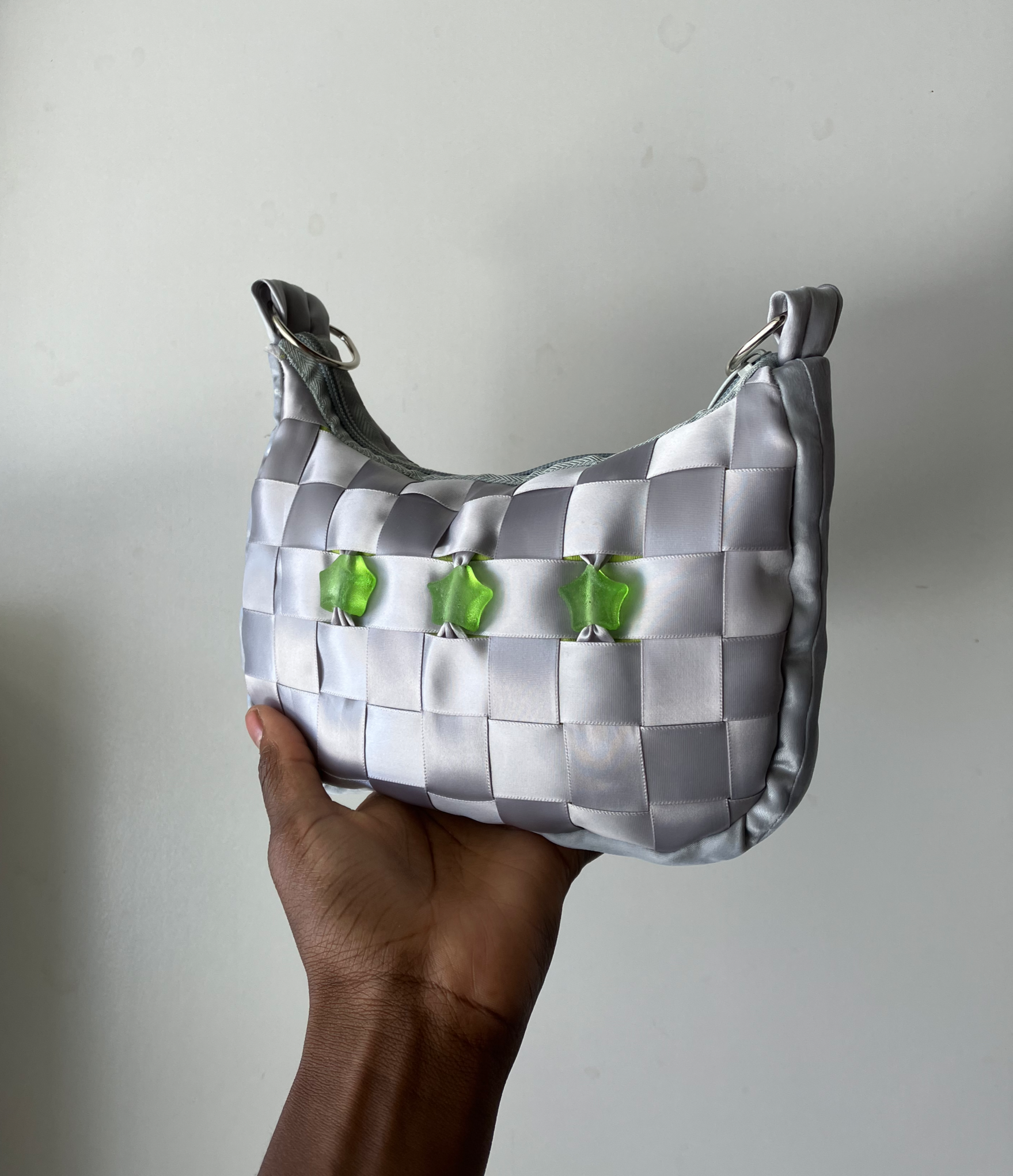
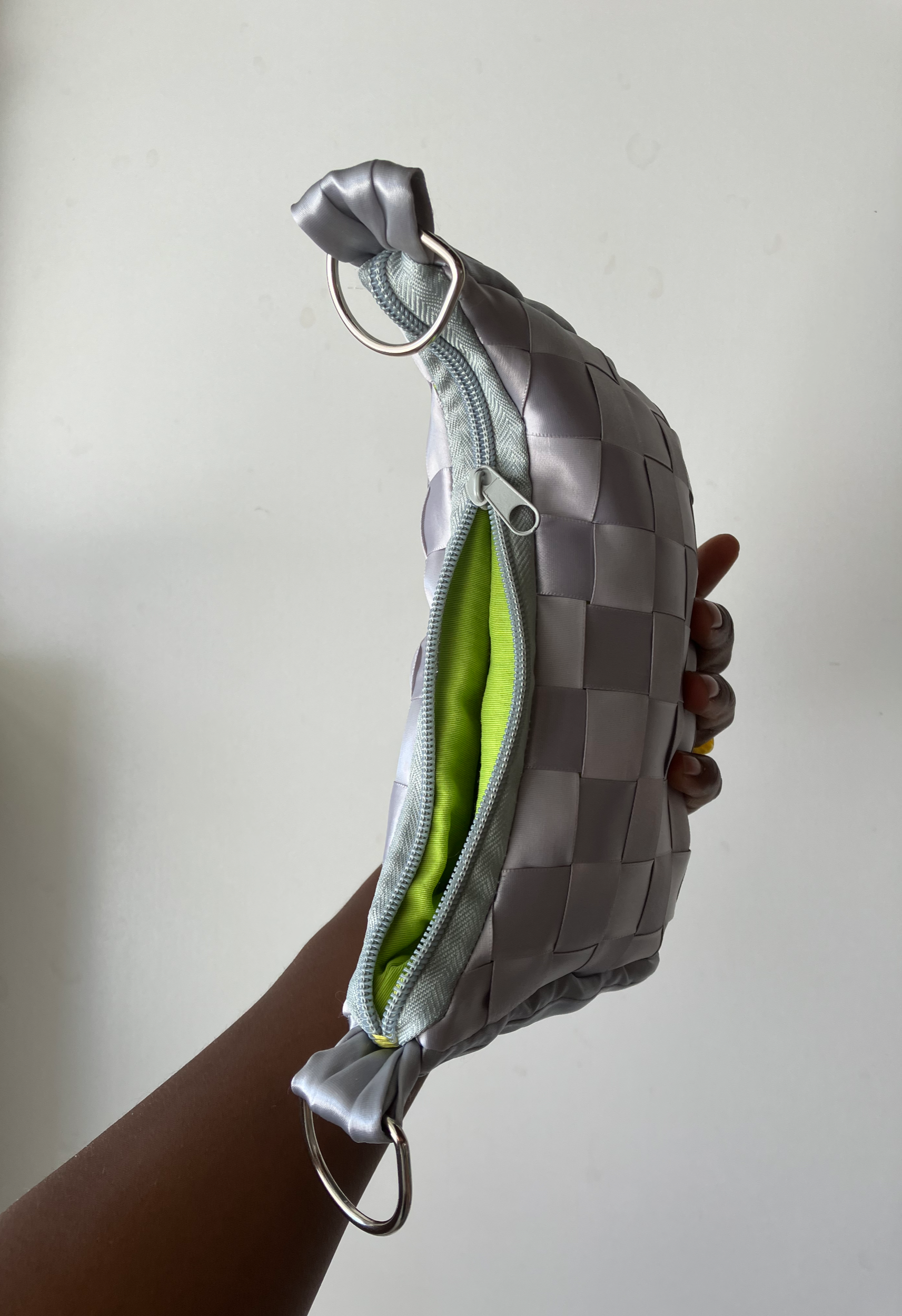
Ingredients:
biomaterial, potato starch beads
secondhand/unused, ribbon (likely nylon)
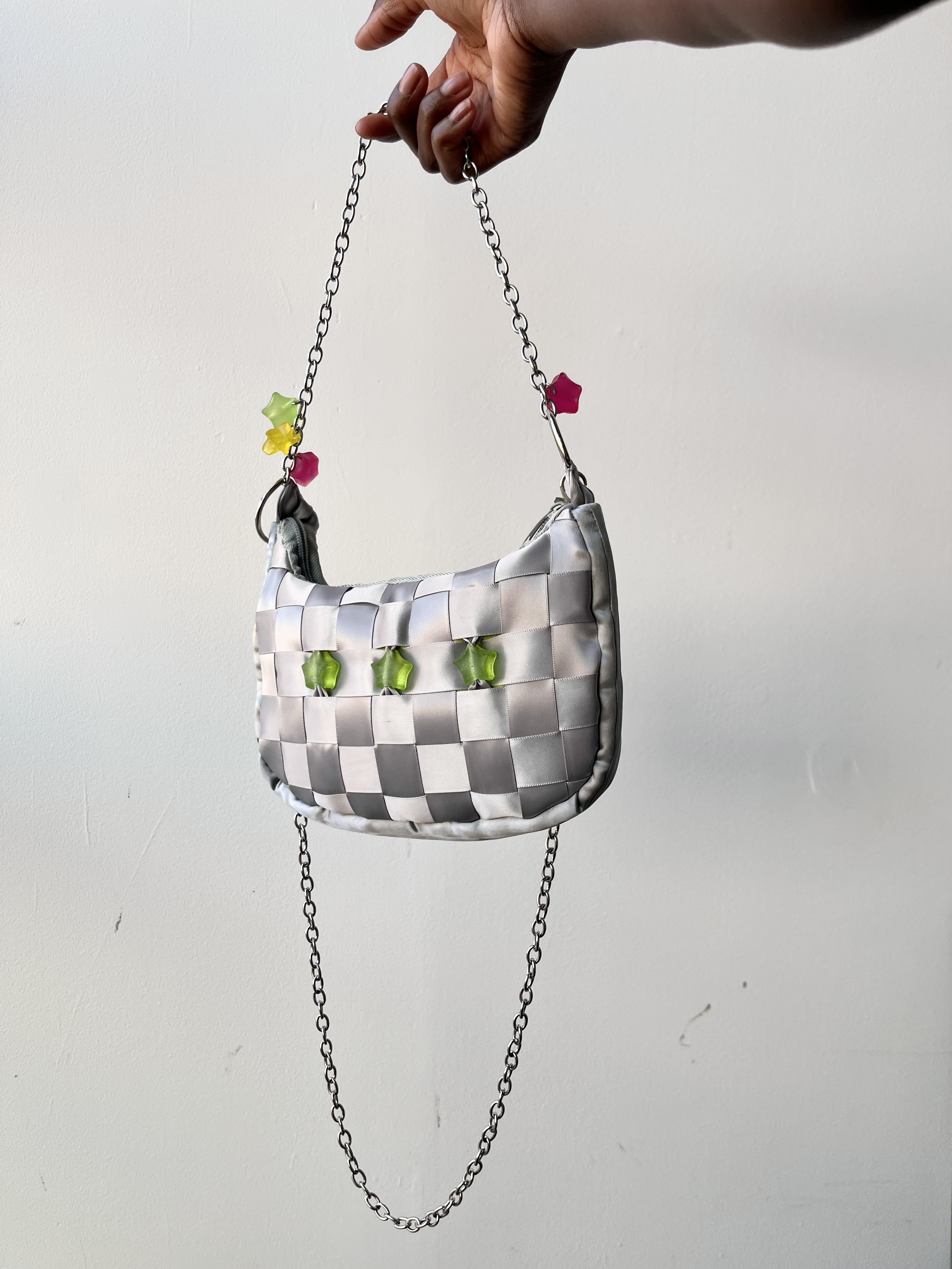
secondhand chain & hardware
reclaimed zipper
secondhand fabric & foam interfacing
Sources:
Mo.Na Gems
used ribbon lot, Ebay
a friend
a broken suitcase
secondhand fabric store, Material Happiness
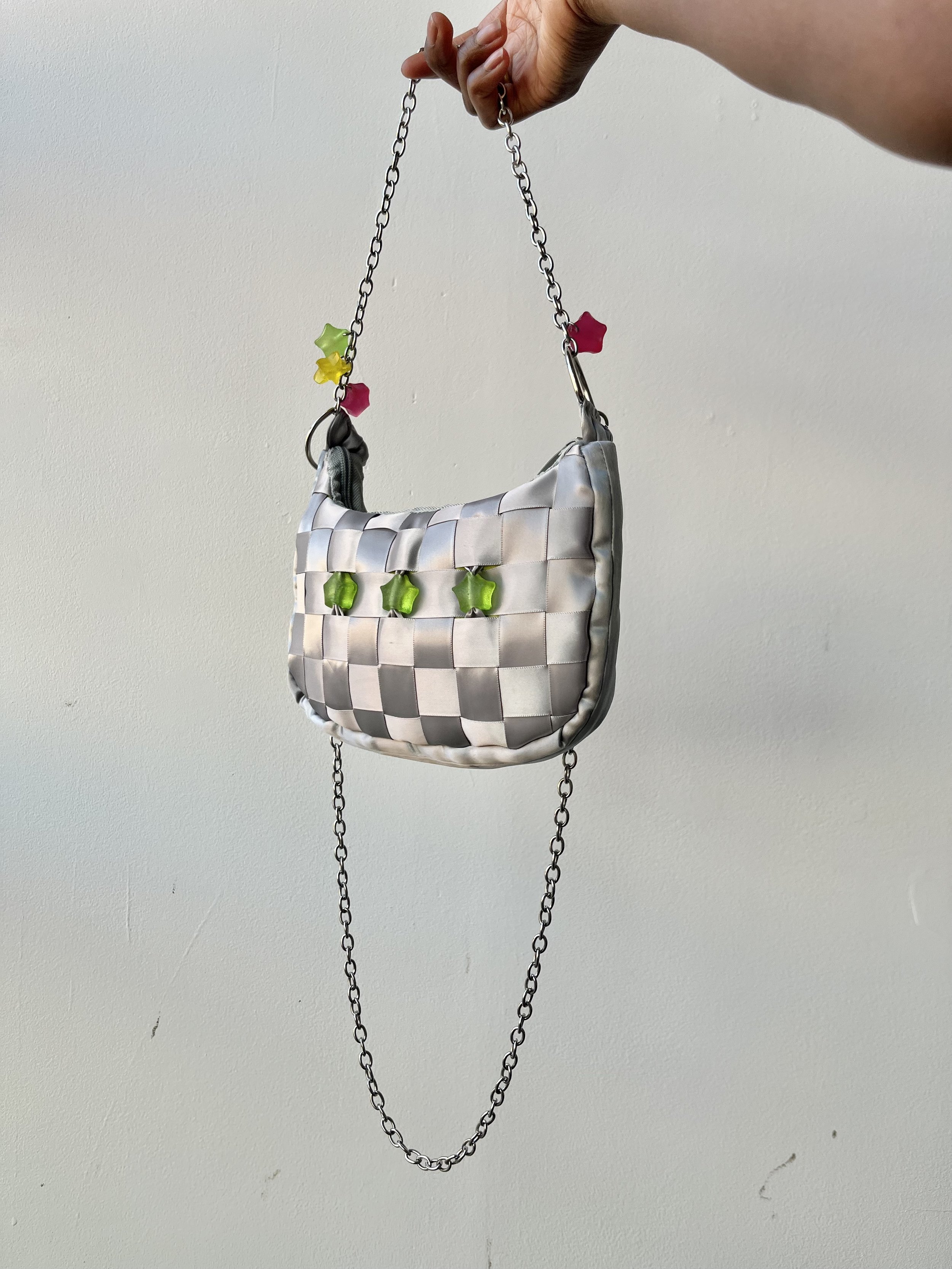
Construction:
the entire exterior is constructed from secondhand ribbon. the front and back panels are plain woven on a makeshift pinboard loom with bioresin beads integrated into the weave.
Material Notes:
reclaiming the zipper from old luggage was quite easy! it made me realize just how much working hardware ends up in landfill. We need to strip old objects for parts more, like we do for cars and industrial machines.